
No Government Approval for Refinery Construction; SPL Did Not Seek BPC Clearance for Machinery Imports
Published : 15:18, 13 November 2026
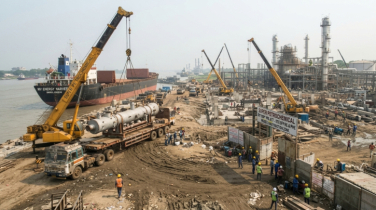
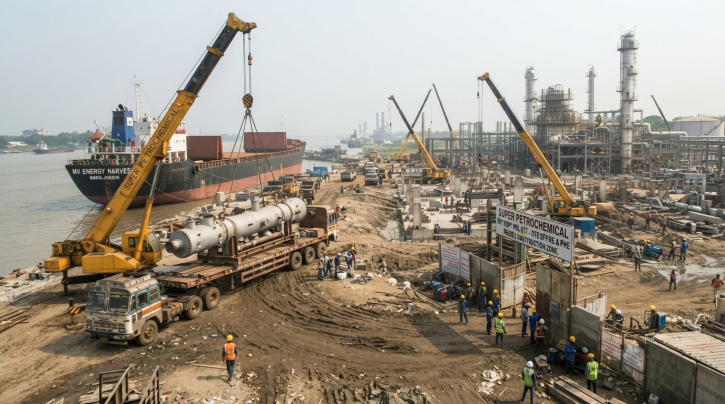
A probe committee formed by the Bangladesh Petroleum Corporation (BPC) has reported that Super Petrochemical PLC (SPL) is constructing a refinery in Chattogram’s Karnaphuli area without government approval. The committee has also found that BPC approval was not sought for importing a substantial volume of capital machinery and equipment for the project. The report may also address the installation of some plant units outside the framework prescribed by the relevant policy.
Clause 7.1 of the Policy for Establishment of Private Refineries and Import, Storage, Processing, Transportation and Marketing of Crude Oil, 2023 prohibits the establishment of a refinery without government approval. However, the SPL refinery project in Karnaphuli has proceeded without following this provision, according to the probe committee.
BPC General Manager (Commercial and Operations) Mohammad Zahid Hossain disclosed the information to journalists on Thursday afternoon, following an inspection of the plant on Wednesday evening. He heads the seven-member recommendation committee formed by the BPC.
Zahid Hossain said construction of the SPL refinery was continuing despite the absence of government approval. Some development work had been carried out at the project site, and new tanks were being constructed. The committee had also inspected the crude processing plant being developed by the company. SPL had submitted some plant-related documents, which were now under review, he added.
He said the committee would include in its report the documents submitted by SPL. The report might also address the construction of Units 2 and 3 outside the framework prescribed by the policy.
Responding to a question about how a large volume of capital machinery had been imported without BPC approval, the committee chief said SPL had not sought any approval from the corporation for importing capital machinery and other equipment.
Earlier, on Tuesday (November 10), BPC Secretary Shahina Sultana issued an office order forming the seven-member committee. It was instructed to submit a report with recommendations within three days on whether SPL should be authorised to operate its refinery for production.
However, uncertainty remains over whether the report can be submitted within the stipulated timeframe, Zahid Hossain said. The committee had only just completed its plant inspection, and it might seek further information from the company. Other committee members would review the issues and discuss them before preparing the report, he added.
Describing Wednesday’s inspection, Zahid Hossain said the committee members had spent more than three hours at the plant examining different aspects of the facility. However, the inspection did not include an assessment of the refinery’s actual technical capacity.
He said the committee had not started and tested each piece of machinery or plant unit. Such assessments would be carried out by a technical committee, which would also examine whether the plant’s input and output processes were functioning properly. The relevant ministry would make the final decision on authorising production, he added.
Meanwhile, questions have emerged in the energy sector over the process of recommending production approval for a refinery before completing an assessment of its technical capacity. Industry stakeholders say that advancing the approval process without properly examining industrial safety, technical capability and environmental risks could pose a threat to the country’s energy security.
More than 30 approvals and clearances from different government agencies are required to establish and operate a refinery. These include approvals from the BPC and Bangladesh Bank; site and environmental clearances from the Department of Environment; licences from the Fire Service and Civil Defence; approval from the Department of Explosives; and layout and safety clearances from the Department of Inspection for Factories and Establishments.
Other requirements include special permits from the Office of the Chief Controller of Imports and Exports, a customs bonded warehouse licence from the National Board of Revenue, VAT registration and various additional formalities.
Questions have been raised over whether SPL followed all the mandatory approval and clearance procedures for establishing the refinery. The absence of BPC approval for importing a substantial volume of capital machinery has come under particular scrutiny. Questions have also been raised about possible customs duty evasion and whether goods other than those declared were imported under the machinery consignments. These allegations, however, require verification by the relevant authorities.
Amid these concerns, SPL has applied to the BPC for permission to import 1.2 million tonnes of crude oil annually, comprising 400,000 tonnes of light crude and 800,000 tonnes of heavy crude.
The company's plan to establish a refinery and import a substantial volume of crude oil while questions over the required approvals remain unresolved has raised concerns in the energy sector.
Energy-sector experts say government approvals, technical capacity, industrial safety and environmental impacts must be thoroughly assessed before a refinery is established and operated. They warn that granting production approval without completing these procedures could expose weaknesses in the regulatory framework.
They also believe a high-level investigation is necessary to examine the imported machinery, construction activities and all relevant approvals. Allowing a refinery to begin production without ensuring proper oversight and safety compliance could create long-term risks for Bangladesh’s energy security.