
Tarique Rahman at 61: A Journey of Struggle, Leadership and Political Transformation
Published : 03:13, 20 November 2026
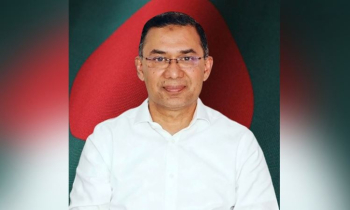
Bangladesh’s political landscape has witnessed several significant transformations over the past few decades. Among the political figures whose careers have closely reflected these changes is Tarique Rahman. His journey encompasses political inheritance, grassroots organisation, imprisonment, years of exile, a long-awaited return to the country and, ultimately, his emergence as the Prime Minister of Bangladesh.
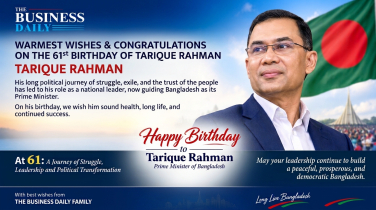
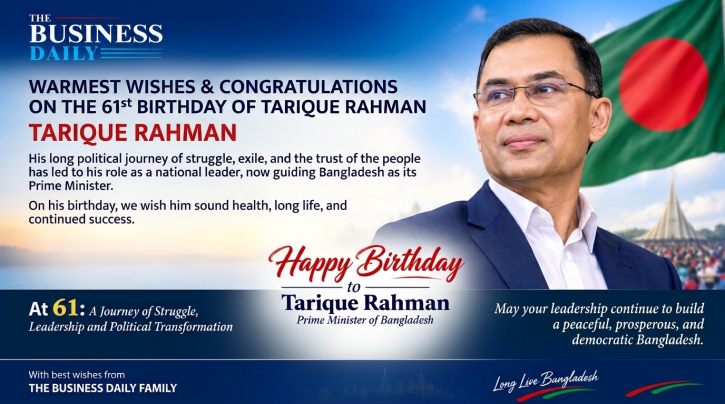
Born on November 20, 1965, Tarique Rahman turns 61 today, marking his entry into his 62nd year. The occasion carries particular significance as he celebrates his birthday while holding the country’s highest executive office. His journey from a political activist to the head of government represents a major chapter in contemporary Bangladeshi politics.
Political Heritage and the Beginning of His Journey
Tarique Rahman was born into one of Bangladesh’s most prominent political families. He is the eldest son of Shaheed President Ziaur Rahman, a Liberation War figure and former president of Bangladesh, and former Prime Minister Begum Khaleda Zia, who served as the country's prime minister three times.
Growing up in a family deeply connected to national politics, Tarique was exposed to political discussions, democratic movements and the responsibilities of public leadership from an early age.
However, his political career developed through his own involvement in party activities. He formally entered politics in 1988 by taking primary membership of the Bangladesh Nationalist Party (BNP) in Gabtali, Bogura. In 1993, he became associated with the Bogura district unit of the party.
His involvement in the 1991 national parliamentary election, particularly in coordinating campaign activities for his mother, helped him gain experience in political organisation and electoral strategy.
Over the following years, his role within the BNP expanded. His involvement in the party's grassroots activities became increasingly visible, particularly during the period surrounding the 2001 parliamentary election.
In 2002, he was appointed Senior Joint Secretary General of the BNP. He subsequently focused on strengthening the party's organisational structure, establishing communication with grassroots leaders and expanding its nationwide political activities.
Imprisonment and Years Away from Home
His political advancement was accompanied by difficult circumstances. In 2007, during the military-backed caretaker government, Tarique Rahman was arrested. He later alleged that he had suffered physical and psychological torture while in custody, resulting in serious health complications.
Following his release, he travelled to London for medical treatment. What initially began as a medical journey eventually turned into an extended period of exile.
For nearly 17 years, he remained outside Bangladesh. Despite the geographical distance, he continued to maintain contact with BNP leaders and activists and remained involved in the party's political decision-making process.
The period presented significant challenges for both Tarique Rahman and the BNP. Following the imprisonment of Begum Khaleda Zia in 2018, the party faced a difficult organisational and political situation.
Tarique Rahman assumed the position of Acting Chairman of the BNP in the same year. Leading the party from abroad, he had to manage organisational challenges, political uncertainty and pressure on party leaders and activists.
Maintaining internal unity and sustaining political activities during this difficult period became one of the defining tests of his leadership.
The 2024 Uprising and His Return to Bangladesh
The student-led mass uprising of July and August 2024 marked a turning point in Bangladesh's political history. Following weeks of demonstrations, violence, and widespread public participation, the government led by Sheikh Hasina fell on August 5, 2024.
The subsequent formation of an interim government created a new political environment and opened the door to a different phase of national politics.
Against this backdrop, Tarique Rahman returned to Bangladesh on December 25, 2025, after nearly 17 years in London.
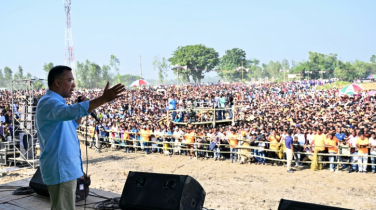
His return generated considerable enthusiasm among BNP leaders, activists and supporters. It also marked his opportunity to participate directly in the country's political activities after years of communicating with the party from abroad.
However, his return was soon followed by a personal tragedy. His mother, former Prime Minister Begum Khaleda Zia, passed away on December 30, 2025. Her death marked a significant moment in both his personal life and the political history of the BNP.
In January 2026, Tarique Rahman assumed the responsibility of BNP Chairman, taking over the party's highest leadership position.
Electoral Victory and the Road to Premiership
The 13th parliamentary election, held on February 12, 2026, became another defining moment in his political career.
Under his leadership, the BNP secured a parliamentary majority, paving the way for the party's return to state power. Tarique Rahman was sworn in as Prime Minister on February 17, 2026.
His elevation to the premiership marked a remarkable transition from party leadership and years of political struggle to the responsibility of governing a country.
However, winning an election and running a government are fundamentally different challenges. The expectations surrounding his administration are considerable, particularly in areas such as economic recovery, employment generation, institutional reform, and public accountability.
‘I Have a Plan’: Turning Political Vision into Reality
One of the most widely discussed statements associated with Tarique Rahman's return to Bangladesh was his declaration: “I Have a Plan.”
The statement reflected his intention to present a broader vision for the country's future. It also created expectations among supporters and ordinary citizens about the direction of the new government.
Now, the central challenge is to translate that political vision into measurable improvements in people's lives.
The government's priorities include strengthening social protection, supporting low-income families, improving agricultural productivity, expanding healthcare facilities, increasing educational opportunities and generating employment.
Initiatives involving family assistance, agricultural support, healthcare access, school meal programmes and social security for working communities have featured in the government's development agenda.
Other areas of attention include canal excavation, tree plantation, investment promotion and efforts to strengthen the national economy.
The long-term success of these programmes will depend on transparency, effective implementation, proper beneficiary selection and sustainable financial management.
Ultimately, the impact of government policies should be measured not by announcements but by the tangible improvements they deliver to citizens.
Leadership, Political Tolerance and Democratic Values
The responsibilities of a prime minister extend beyond economic decisions and development projects. Leadership is also reflected in political behaviour, institutional accountability, public engagement and respect for democratic principles.
Tarique Rahman now has an opportunity to promote a political environment where opposing views are respected and democratic institutions function independently.
Ensuring freedom of expression, protecting media independence, strengthening the rule of law and maintaining equal treatment under the law are essential elements of a healthy democracy.
Political differences should not become sources of violence or exclusion. Instead, constructive dialogue, tolerance and institutional accountability should guide national politics.
Maintaining communal harmony and ensuring the safety of all religious and social communities must also remain important priorities for the government.
The Challenges Ahead
Bangladesh faces several interconnected challenges, including economic stability, inflation, unemployment, corruption, education, healthcare and law enforcement.
For young people, employment opportunities and access to quality education remain particularly important. Businesses also need a stable environment, predictable policies and greater confidence in public institutions.
At the same time, strengthening democratic institutions, ensuring judicial independence, protecting fundamental rights and improving public administration will be essential to achieving sustainable national development.
The political experience Tarique Rahman has accumulated over the years may provide an important foundation for his leadership. Nevertheless, his performance as prime minister will ultimately be judged by the results his government delivers.
The expectations of the people are greater than political promises. They want better living standards, economic opportunities, security, justice and a government that remains accountable to the public.
A Birthday Marking a New Political Responsibility
As Tarique Rahman turns 61 and enters his 62nd year, he finds himself at a significant moment in Bangladesh's political history.
His life has included political opportunities, controversies, imprisonment, years away from his homeland and a dramatic return to national leadership. Today, his role has moved beyond party politics to the broader responsibility of governing a nation.
His greatest opportunity now lies in building public confidence through effective governance, strengthening democratic institutions and creating an economy that offers opportunities for all citizens.
The true measure of his leadership will not simply be his political journey or electoral victory. It will be the lasting impact of his policies on the lives of ordinary Bangladeshis.
On his birthday, we extend our best wishes to Prime Minister Tarique Rahman for good health, longevity and success in fulfilling his national responsibilities.
May Bangladesh move forward under his leadership towards democracy, justice, national unity, peace and prosperity.
Happy Birthday, Prime Minister Tarique Rahman.