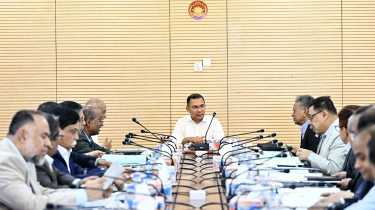

Prime Minister Tarique Rahman Meets Opposition Leader Shafiqur Rahman; July Charter and Political Unity Discussed
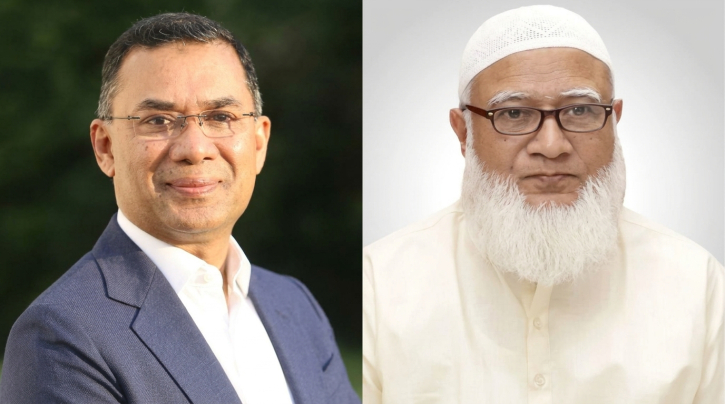
Published : 02:38, 19 November 2026
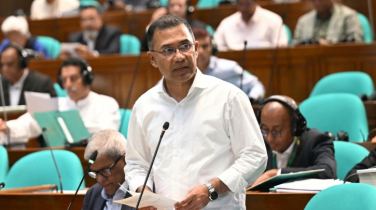
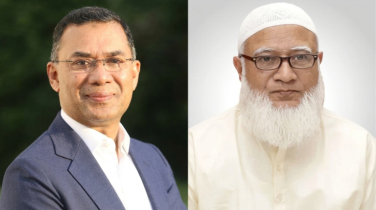
Opposition Leader and Bangladesh Jamaat-e-Islami Ameer Dr. Shafiqur Rahman has met Prime Minister and Leader of the House Tarique Rahman. The meeting focused on the country's current political situation, implementation of the July National Charter, the referendum verdict and efforts to establish unity among democratic political forces.
The meeting took place at the Prime Minister's Office in the Jatiya Sangsad Bhaban on Wednesday (November 18), shortly before Maghrib prayers.
A Jamaat-e-Islami lawmaker, speaking to the media on condition of anonymity, said Prime Minister Tarique Rahman had invited the opposition leader for tea, following which Shafiqur Rahman met with him. According to the lawmaker, no one else was present at the meeting.
The lawmaker said the opposition leader brought several unresolved issues, including implementation of the July National Charter and the referendum verdict, to the Prime Minister's attention. Both leaders also reportedly agreed to work together, setting aside political differences, to address the ongoing violence in the country.
Meanwhile, recent political violence and activities attributed to Awami League activists were also discussed in parliament. In his concluding speech at the fourth session of the 13th Jatiya Sangsad on Wednesday, Prime Minister Tarique Rahman described the ousted Awami League as a “terrorist group” and called on all democratic political forces to unite against its resurgence.
The Prime Minister said all pro-democracy political parties must come together, as they did during the 2024 movement, to resist any conspiracy to turn Bangladesh into a subservient state again. He urged democratic parties both inside and outside parliament to work collectively.
Tarique Rahman further said unity among political parties was essential to prevent the resurgence of the ousted fascist forces. He expressed confidence that the people of Bangladesh would not allow an authoritarian system to return.
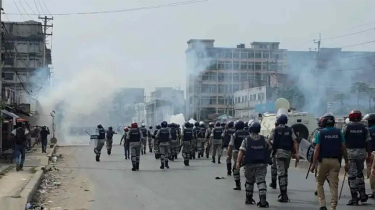
Tensions have recently spread across several parts of the country amid allegations of violent activities by Awami League activists. Reports say the houses of two BNP lawmakers and a police station in Tungipara, Gopalganj, were set on fire. There have also been reports of an arson attack on the village home of reserved-seat lawmaker Nusrat Tabassum and fires involving several buses in the capital. Two people were also reportedly killed in an attack on a BNP procession in Narail.
Against this backdrop, calls for preventing political violence and establishing unity among democratic parties have grown louder.
Meanwhile, Jamaat-e-Islami is set to announce a month-long programme of protests in December against what it describes as sabotage by the Awami League and ongoing political violence. The party will disclose details at a press conference on Thursday (November 19). It will also organise a protest rally and procession in Dhaka on November 21.
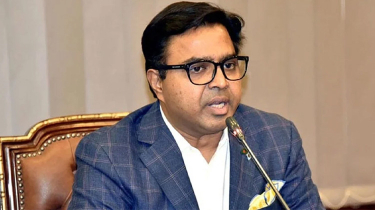
Jamaat Secretary General Mia Golam Parwar disclosed the plans at a press conference held at the party's central office on Wednesday. He urged leaders and activists at all levels of the organisation to stage protest programmes from their respective positions.
Golam Parwar alleged that supporters of fascism still hold positions in the administration and various government institutions. He called for identifying them and bringing them to justice. He also said there would be no place for fascism in Bangladesh.
It may be recalled that former Prime Minister Sheikh Hasina left Bangladesh for India after being ousted in the student-led mass uprising of 2024. She is currently in Delhi. She has been sentenced to death in a case related to crimes against humanity linked to the July events.