
Energy Crisis Exposes Bangladesh’s Economic Vulnerabilities
Published : 01:47, 27 November 2026
Dhaka: Bangladesh’s growing energy crisis is putting mounting pressure on its industrial sector and wider economy, exposing the risks of heavy dependence on imported fuel. Frequent power outages, gas shortages, and rising fuel prices are increasing production costs, with the country’s vital ready-made garment (RMG) industry facing growing challenges in maintaining its global competitiveness.
A report by TIME Magazine examines how global energy market volatility and geopolitical tensions are affecting Bangladesh’s energy supply, industrial production and economic outlook.
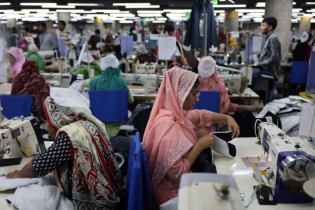
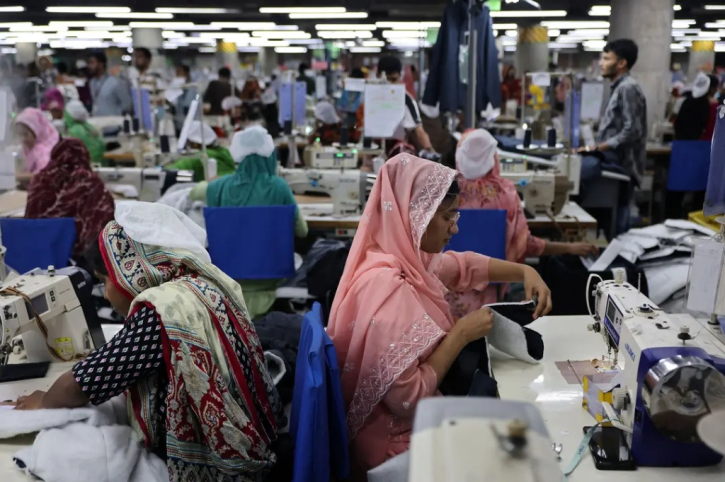
The report takes readers to a Ha-Meem Group garment factory in Ashulia, north of Dhaka, where thousands of workers are engaged in producing denim garments. Cutting machines slice fabric into precise shapes, while sewing workers assemble jeans, skirts and jackets. The garments then go through washing, ironing and finishing before labels of international brands such as Gap, American Eagle, and JCPenney are attached.
According to the report, Ha-Meem Group employs around 90,000 workers and produces approximately 9.3 million garments every month.
Yet behind this large-scale production operation lies a persistent energy challenge. At one point, the factory lights begin flickering before the production floor briefly goes dark. Moments later, four large diesel generators, built with British technology, roar into action and restore power. The generators automatically start when gas supplies fall.
Tanul Chakraborty, head of electricity, energy and environmental sustainability at Ha-Meem Group, says Bangladesh’s grid electricity supply is highly unreliable, with frequent load-shedding. After gas, diesel is the most dependable energy source, while grid electricity ranks third. In effect, he says, much of the country’s economy is now running on diesel.
For an economy valued at $510 billion and the second-largest in South Asia after India, the situation is striking. The report says the wars in Ukraine and Iran have exposed the vulnerabilities of Bangladesh’s growing dependence on imported energy.
Since Russia’s invasion of Ukraine in 2022, industrial gas prices in Bangladesh have increased by around 150%, while diesel prices have risen by nearly 70%. Following the outbreak of the war involving Iran, spot-market prices for liquefied natural gas (LNG) have reportedly almost tripled.
Garment Industry Faces Rising Costs
The ready-made garment industry is one of Bangladesh’s largest sources of formal employment. It directly employs around four million people and generated $38.7 billion in export earnings last year, accounting for more than 80% of the country’s total export revenue.
Higher energy prices and unreliable electricity supplies are increasing production costs across the sector. The pressure is making it harder for Bangladeshi manufacturers to compete with rival garment-producing countries.
The crisis, however, is not confined to Bangladesh. According to TIME, countries across the Global South are struggling with prolonged energy shortages and rising fuel costs, with the heaviest burden falling on low-income communities.
The Philippines, which relies heavily on imported oil from the Gulf region, has introduced emergency energy-saving measures. These include a four-day working week, restrictions on government travel and flight cancellations.
Diesel prices have reportedly increased by 86% in Nigeria and by more than 50% in Tanzania and Ethiopia. Higher fuel costs have raised expenses for agriculture, transportation and generator-powered electricity, contributing to rising prices of essential food items such as rice and maize.
World Bank Chief Economist Indermit Gill warned in April that the poorest people, who spend most of their income on food and energy, would be hit hardest by the crisis.
Power Shortages Disrupt Daily Life in Dhaka
The report describes how electricity shortages are affecting life in Dhaka, a densely populated megacity of around 40 million people that normally remains active around the clock.
With the national grid facing an electricity deficit of more than 3,000 megawatts, the government has reportedly imposed strict load-shedding measures, prioritising essential services such as hospitals and pharmacies.
Illuminated billboards in busy commercial areas are switched off after sunset, while shops are closing an hour earlier than usual. Conditions in rural areas are reportedly even more severe, with some communities facing up to 16 hours without electricity a day.
For ordinary people, the energy crisis has turned daily life into a constant calculation. Many wake before dawn in the hope of getting sufficient gas pressure for cooking. In the humid heat, households must consider how long they can keep fans running and how much time they may have to spend waiting for fuel at filling stations.
The disruption to business activity is also raising concerns about food security. Citing global nutrition monitoring organisations, the report warns that 18.1 million people in Bangladesh could soon face food insecurity.
Energy Crisis Becomes a Political Challenge
The rising cost of energy has also become a political issue. According to the report, thousands of opposition supporters staged a long march in September, putting pressure on Prime Minister Tarique Rahman’s government to take more effective measures to control soaring fuel prices.
The report says Rahman assumed office in February, just weeks before the outbreak of the war involving Iran.
Michael Kugelman, a senior fellow for South Asia at the Atlantic Council, says the energy sector is the biggest test facing the new government and has become a central issue in opposition protests.
The report also links Bangladesh’s energy challenges to regional and international geopolitics. Following the fall of former Prime Minister Sheikh Hasina amid the 2024 mass uprising, relations between Bangladesh and India have become increasingly strained. India’s decision to provide shelter to Hasina has further complicated ties between the two neighbours, according to the report.
Bangladesh imports around one-sixth of its electricity from India, making the country’s reliance on cross-border power supplies a strategic vulnerability.
Rooppur Nuclear Project and Global Power Rivalries
Bangladesh’s energy challenges are also intertwined with the competing interests of major global powers, including Russia, the United States and China.
The country has invested $12.65 billion in its first nuclear power plant at Rooppur, being built by Russia’s state nuclear corporation Rosatom. A substantial portion of the project is financed through Russian loans.
The plant was initially expected to become operational in July 2024. However, the war in Ukraine has reportedly delayed the project repeatedly, creating complications in financial transactions with Russian banks and disrupting the transportation of equipment by air and sea.
Washington has also put forward an alternative avenue for nuclear cooperation. According to the report, Bangladesh and the United States signed a memorandum of understanding on September 25 concerning strategic civilian nuclear cooperation focused on small modular reactors (SMRs).
At the same time, Bangladesh has been expanding its engagement with China, a major strategic competitor of the United States.
The report says that in June, following his appointment as prime minister, Tarique Rahman made his first overseas visits to Malaysia and China. During the Beijing visit, the two countries signed 17 agreements and memorandums of understanding, described as opening a “new era” in bilateral relations. One of the agreements directly concerns cooperation in renewable energy.
However, citing a US State Department source, TIME reports that two of the agreements involved entities under US sanctions. The growing closeness between Dhaka and Beijing has reportedly raised concerns in Washington.
Bangladesh Turns to Solar Energy
Facing pressure from rising global energy prices and its dependence on imported fuel, Bangladesh is seeking to expand domestic renewable energy production.
The government has recently announced a special incentive package to encourage rooftop solar installations. Under the package, import duties on solar equipment have been reduced from 17% to 1%, while systems equipped with battery storage are receiving particular encouragement.
Government figures cited in the report show that around 200 megawatts of solar power were added to the national grid during the first six months of the year. However, Bangladesh would need to increase the current pace of expansion sixfold to meet its ambitious five-year target.
Rooftop solar may be a practical option for households, but it is less effective for large factories that operate around the clock.
Ha-Meem Group has installed rooftop solar panels with a capacity of 29.2 megawatts at its factory, making it one of the country’s largest privately owned solar power projects. Chakraborty says, however, that for a factory operating 24 hours a day, the solar system can provide useful power for only around four hours during daylight.
He says Ha-Meem Group’s daily energy expenditure has increased from approximately $200,000 to $300,000 over the past three months.
At the same time, international buyers are unwilling to pay higher prices for garments. The company is therefore trying to improve production efficiency to prevent orders from shifting to competitors such as Vietnam, Cambodia and Pakistan.
Economic Diversification Faces Further Obstacles
The energy crisis could also undermine Bangladesh’s ambition to diversify its economy.
Alongside expanding its pharmaceutical and leather industries, Bangladesh has set ambitious goals to enter sectors such as automobiles, medical equipment and semiconductors.
But competition in global markets is intense, and attracting major investors will require reliable electricity and energy supplies. Persistent power shortages could discourage businesses from investing in new industries or expanding existing operations.
The report also highlights growing concerns about security in the Middle East. In recent weeks, Yemen’s Houthi rebels have reportedly attempted to block the Bab al-Mandab Strait in the Red Sea and intensified missile and drone attacks on Saudi Arabian airports, cities and oil facilities.
The developments have disrupted air travel and raised fears of a wider regional conflict, adding further uncertainty to global energy markets.
Fazle Shamim Ehsan, managing director of Fatullah Apparels Limited, a company that produces around 22,000 garments a day, says the situation is extremely difficult for the current government. He adds that conditions would have been much better if there were no war in the Middle East.
Overall, Bangladesh’s energy crisis has become much more than a problem of electricity supply. It is increasingly affecting industrial production, export earnings, employment, food security and economic growth. If volatility in the international energy market continues, the pressure on Bangladesh’s garment industry and the wider economy could intensify further.
Translated and edited based on a report from Time magazine.