
From Tk3,000 to Tk15 Lakh in Monthly Sales: How Farzana Islam Moury Built a Handicraft Business
Published : 02:54, 29 November 2026
A childhood passion for drawing, handmade crafts and personalised gifts has grown into a business showcasing Bangladeshi art and heritage. Farzana Islam Moury, founder of Dhaka-based Craftimation, started her venture in 2020 with just Tk3,000, working from her family's dining table. Today, the business offers more than 500 products and generates average monthly sales of around Tk15 lakh.
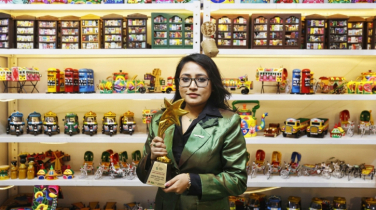
Moury recently received the Best Micro Entrepreneur (Female) award at the 13th National SME Product Fair 2026, held at the Bangladesh-China Friendship Conference Centre in Agargaon, Dhaka. She received the award from Prime Minister Tarique Rahman, describing the recognition as a major achievement and a source of renewed inspiration.
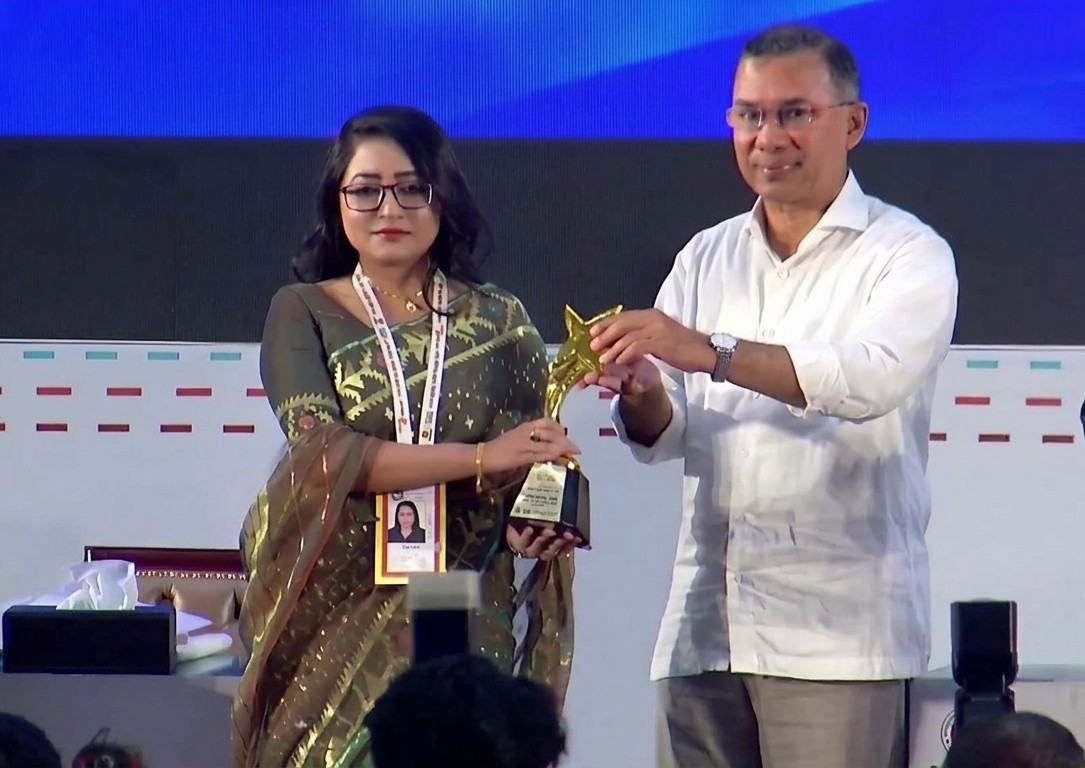
Farzana Islam Mouri, founder and CEO of Craftimation, received this award from Tarique Rahman at the 13th National SME Products Fair.
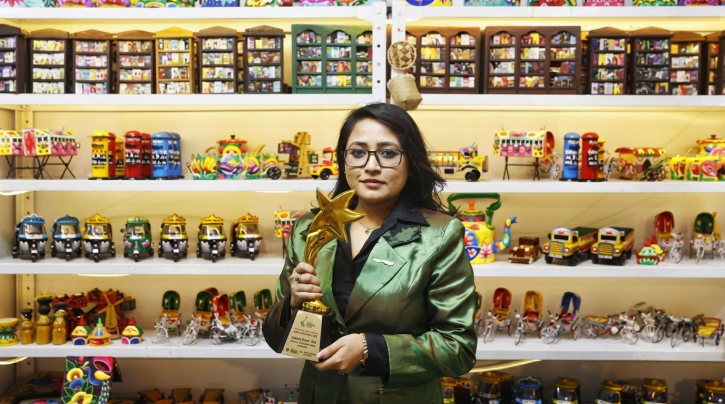
Craftimation produces a wide range of items, including rickshaw-art products, metal miniatures, 3D ceramic mugs, wooden miniatures, Jamdani-inspired diaries, hand-painted sunglasses, resin sculptures, home décor and customised corporate gifts. Its product range now exceeds 500 varieties, with prices ranging from Tk50 to Tk20,000. The company also supplies customised gifts and souvenirs to corporate clients, including bKash and Unilever.
The business has nine permanent employees and works with an additional 50 to 60 artists and craftspeople depending on production requirements and orders. Its office is in Malibagh, while production takes place at three units in Malibagh Chowdhurypara, Old Dhaka and Khilgaon.
Leaving banking to follow a creative ambition
Moury completed her BBA in Accounting in 2018 and briefly joined a bank. She soon realised that a conventional banking career did not match her interests. After around three months, she left the job to pursue her passion for art and handmade products.
Since childhood, she had preferred making personalised gifts rather than buying ready-made items. She created cards featuring family photographs for friends' weddings and prepared handmade gifts for people close to her. Gradually, she began considering how to turn this interest into a business.
In 2020, while pursuing an MBA in Finance, she opened a Facebook page named Craftimation and started the venture with Tk3,000. Her initial products included handmade cards, small lamps and tree lamps. She learned various craft-making techniques through YouTube tutorials before experimenting with ceramic clay to create three-dimensional designs on mugs.
The customised mugs, featuring customers' names, photographs or company logos, gained popularity. As demand increased, she focused primarily on mug production until around mid-2023. She later expanded the product range in response to customer preferences and new design ideas. Craftimation formally launched in 2021 after obtaining a trade licence.
A Tk20 lakh loss and a mother's support
The business faced a major setback in 2024 when heavy rainfall and waterlogging flooded its office and factory on the ground floor of Moury's home. Finished products worth nearly Tk20 lakh were damaged.
To help her recover, her mother encashed savings certificates worth Tk10 lakh. The financial support enabled Moury to restart production and gradually bring the business back on track.
Moury credits her mother as her biggest source of inspiration and says her husband's encouragement has also played an important role in sustaining the business.
SME fairs open doors to corporate clients
Trade fairs have been an important part of Craftimation's growth. In 2024, Moury visited the National SME Product Fair to observe how entrepreneurs presented their products, attracted customers and secured orders. The following year, she returned with her own stall and received the Best Stall recognition in the handicrafts zone.
The participation helped her connect with corporate organisations, reach new buyers and secure orders. Craftimation's visibility also grew in the market for customised gifts and corporate souvenirs. According to Moury, the recognition went beyond an award, helping introduce the brand to a wider audience and build customer confidence.
Celebrating Bangladeshi heritage through rickshaw art and metal miniatures
One of Craftimation's distinctive areas is its use of traditional Bangladeshi rickshaw art on everyday products and gifts. The designs appear on mobile phone covers, pens, sunglasses, lanterns, lunch boxes and wooden trunks. The company also creates personalised portraits of customers and their family members in the style of rickshaw art. Around 15 artists are involved in this work.
In 2023, Moury also invested in metal miniatures. Craftimation makes small-scale versions of rickshaws, vans, baby taxis, trucks, bioscopes, bullock carts and pushcarts. Metal sheets are shaped using hand-press moulds and laser cutting. The components are then welded together to form structures, which are decorated with traditional rickshaw-art designs.
Prices vary according to the product and design. A miniature rickshaw sells for Tk450, a CNG or tempo model for Tk630, a bookshelf for Tk799 and sunglasses for Tk400. Lanterns cost between Tk1,200 and Tk1,500, while a miniature truck is priced at Tk1,500. Customised paintings range from Tk2,000 to Tk5,000, with larger bespoke designs costing up to Tk20,000.
Some small entrepreneurs purchase Craftimation products at wholesale prices and sell them under their own brands. Corporate clients, meanwhile, commission customised items for employee recognition, business partners, visiting foreign guests and annual corporate gifts.
Plans for direct exports and 1,000 jobs
Craftimation's products have reached customers in Canada, Australia and the United Kingdom, although shipments currently take place through third-party arrangements. Moury plans to begin direct exports under the company's own arrangements next year. She is also considering establishing a dedicated factory to increase production capacity.
Her ambition extends beyond expanding the business. She wants to create more employment opportunities for local artisans and craftspeople, with a long-term target of generating jobs for 1,000 people. She is also developing toys inspired by Bangladesh's culture and heritage to help introduce younger generations to the country's traditional art and identity.
For aspiring entrepreneurs, Moury recommends preparing a business plan covering at least two to five years before starting a venture. She advises them to understand their chosen market, competitors, production costs, and potential customers.
From a small operation on a dining table to a growing handicraft business, Moury's journey reflects how creativity, product innovation, and resilience can turn a modest idea into an enterprise. Her broader vision is to take Bangladeshi craftsmanship to international markets under the 'Made in Bangladesh' identity while creating sustainable opportunities for local artisans.
Subject-