
Badal Farazi Set for Parole After 18 Years in Prison; Family Hopes for Permanent Freedom
Published : 17:05, 23 November 2026
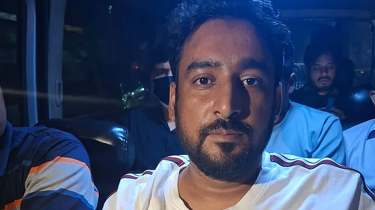
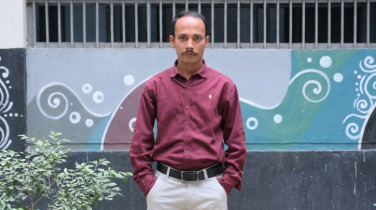
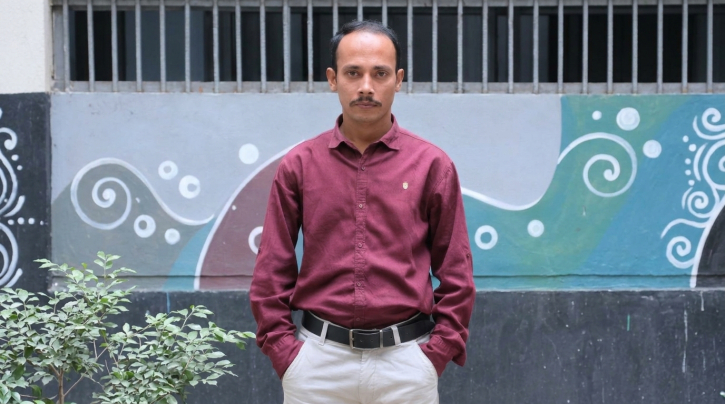
Badal Farazi, a resident of Mongla in Bagerhat, is set to walk out of prison on four weeks' parole after spending nearly 18 years behind bars amid allegations that he was wrongly convicted in a Delhi murder case because of a similarity in names.
Following an order from the Delhi High Court and subsequent administrative procedures in Bangladesh, preparations are underway to transfer him from Kashimpur High Security Prison in Gazipur to his home district of Bagerhat, where he is expected to be released on Tuesday, November 24.
Badal's long imprisonment inspired the novel Badaler Karabas (Badal's Imprisonment), written by author Rahitul Islam. His story has once again drawn public attention following the publication of the book, which recounts his prolonged incarceration, separation from his family, and struggle for justice.
While parole in Bangladesh is generally granted for a few hours, Badal's parole period has been set at four weeks, or 28 days—approximately 672 hours. The unusually long duration has reportedly created some administrative challenges for the police, particularly in determining the arrangements for implementing the order.
People released on parole in Bangladesh are generally kept under continuous police supervision. However, the specific security arrangements for Badal have yet to be clarified. A government order also reportedly restricts him from speaking directly to the media during the parole period.
How the Parole Was Approved
Badal, who was convicted by an Indian court, is serving his sentence in Bangladesh under the India-Bangladesh Agreement on the Transfer of Sentenced Persons (TSP).
To obtain judicial approval for his parole, lawyers Sarthak Magn, Vaibhav Bhardwaj and Ranjit Kumar Sahu filed an application, CRL MA 30616/2026, in writ petition WP (CRL) 1153/2026 before the Delhi High Court.
On September 29, Justice Amit Bansal granted the specific relief sought in the application. The court, however, clarified that any decision regarding parole or furlough must comply with the applicable laws of the country concerned.
Following the court order, India's Ministry of External Affairs sent a memorandum to Bangladesh's Ministry of Home Affairs on October 1. The Home Ministry issued another memorandum on October 11. Later, on October 25, Badal's sister, Aklima Begum, submitted an application seeking parole for her brother. The opinion of the Law and Justice Division of Bangladesh's Ministry of Law was subsequently obtained.
In its latest memorandum, issued on November 16 by the Prison-2 Branch of the Ministry of Home Affairs, the Gazipur Deputy Commissioner and District Magistrate were requested to take the necessary steps to grant Badal four weeks of parole.
The memorandum cited the Delhi High Court's order, the opinion of the Law and Justice Division and paragraph 1(b) of the parole guidelines issued on June 1, 2016, as the legal basis. It also stated that Badal would have to comply with the conditions set out in the relevant guidelines during the parole period.
The memorandum was signed by Deputy Secretary (Additional Charge) Md Aminul Islam. It listed Badal's prisoner number as 5002/A. Copies were sent to eight officials, including the Inspector General of Police, the Inspector General of Prisons and the Superintendent of Police of Gazipur. Prison authorities have also confirmed the development.
How Badal's Imprisonment Began
Badal's ordeal began in 2008. On May 6 that year, 71-year-old Nirmala Madan was murdered at her home, C-13, Dayanand Colony, in Delhi's Lajpat Nagar-4 area. A murder case was filed with Amar Colony Police Station.
Police were looking for a man named Badal Singh, who had worked as a domestic helper for the victim. Two months and seven days after the murder, Bangladeshi national Badal Farazi entered India.
Badal had become fascinated by the Taj Mahal after watching the 2004 Bollywood film Veer-Zaara, starring Shah Rukh Khan, Preity Zinta and Rani Mukerji. He initially planned to visit the monument with four friends. When the others eventually could not make the trip, he decided to travel alone to fulfil his dream.
On July 9, 2008, the Indian High Commission in Dhaka issued him a tourist visa. He entered India through the Benapole-Haridaspur border on July 13. Soon after, he was detained by India's Border Security Force (BSF). On July 21, he was formally arrested in the murder case as "Badal Singh".
At the time, Badal was an eighth-grade student. Reports say he could not adequately explain his identity because he did not speak English or Hindi.
On December 17, 2012, the Bangladesh High Commission in New Delhi sent a letter to India's Ministry of External Affairs detailing Badal's passport and visa numbers, the date his visa was issued, and his entry into India. The Indian High Commission in Dhaka also confirmed that it had issued the visa. His school authorities provided a certificate in support of his identity. Despite the presentation of these documents and information, he remained in custody.
On July 21, 2015, a Delhi court found him guilty. He was sentenced to life imprisonment on August 22 that year. The Delhi High Court upheld the sentence the following year.
Badal spent nearly 10 years in Delhi's Tihar Jail. During his imprisonment, he completed his secondary, higher secondary, and undergraduate-level studies. He was also involved in various prison activities. Media reports have said that Tihar prison authorities produced a documentary about him.
Meanwhile, human rights activists in Delhi organised human chains and signature campaigns at different times, demanding his release.
On July 6, 2018, Badal was transferred to Bangladesh under the prisoner transfer agreement. The then Home Minister Asaduzzaman Khan had assured that steps would be taken regarding his release and had also expressed support for his claim of innocence.
However, after returning to Bangladesh, Badal was kept at Dhaka Central Jail in Keraniganj. Following the mass uprising of 2024, he was transferred to Kashimpur Prison. Sources say he was unable to take with him several documents brought from Delhi that had remained at the Keraniganj prison.
On July 8, 2018, Supreme Court lawyer Barrister Md Humayun Kabir Pallab filed a writ petition with the High Court challenging the legality of Badal's continued imprisonment in Bangladesh. On July 10, a High Court bench comprising Justice JBM Hassan and Justice Md Khairul Alam dismissed the petition because it had not been properly presented. The issue of Badal's transfer to Bangladesh as a convicted prisoner from India was also raised during the hearing.
On February 24, 2019, Asif Nazrul, then a professor in the Department of Law at the University of Dhaka and a former legal adviser, wrote a column in Prothom Alo titled "Badal Athoba Badalder Golpo" (The Story of Badal or Others Like Badal), calling for his release. Human rights activist Nur Khan Liton has also repeatedly urged the government to resolve the matter.
Under Section 433A of India's Code of Criminal Procedure, certain categories of life convicts must serve at least 14 years in actual imprisonment before they can be considered for release through remission. However, completing that period does not automatically guarantee release; a decision by the relevant authority is required.
According to his family, Badal completed 14 years of imprisonment on July 20, 2022. Efforts were subsequently made to secure his permanent release, but they were unsuccessful. On February 23, 2024, the Delhi government's Sentence Review Board considered his case for premature release. However, the board rejected the application, as recorded on page 95 of the meeting minutes.
Novel Brings Badal's Story Back into the Spotlight
Badal's long imprisonment returned to public attention through the initiative of journalist Mizanur Rahman Sohel. After learning about Badal's situation, Sohel informed writer Rahitul Islam, who later published a report about him in Prothom Alo. Rahitul subsequently wrote the novel Badaler Karabas, based on Badal's life.
In February this year, Prothoma Prokashon announced the publication of the book, subtitled "18 Years Due to Wrongful Conviction: From India to Bangladesh". It recounts Badal's arrest, trial, allegations of torture in prison, education, efforts by human rights activists and the legal complications following his return to Bangladesh.
The publication strengthened public calls for his release. On April 6, Badal's relatives, readers and human rights activists formed a human chain in front of the National Press Club in Dhaka, giving the government a seven-day ultimatum to decide on his release.
Speakers at the demonstration alleged that the Home and Law ministries had given assurances under the previous two governments but had failed to take effective steps to secure his release. Prochesta Foundation also joined the campaign. Initiatives demanding his freedom were organised abroad, while the campaign gained further momentum on social media.
Reacting to the news of Badal's expected parole, writer Rahitul Islam said, "On Sunday, Badal will step outside the prison walls. I am going there myself to bring him back. There is no point in writing literature if it cannot contribute to people's welfare or stand beside people."
Rahitul added that parole would not provide a permanent solution or compensate for the 18 years Badal had lost. He called on the governments of both countries to take steps towards a lasting resolution.
Journalist Mizanur Rahman Sohel said, "After learning about the 18 years of deprivation and helplessness endured by an imprisoned and vulnerable man, I took the initiative to bring his story before the media. Following that initiative, writer Rahitul Islam came forward, news reports were published, and a novel was written. Then, through the collective efforts of human rights activists, relatives, readers, and concerned citizens, along with a lengthy legal and administrative process, the path to Badal's release was finally created. As a journalist, this is a major achievement for me. However, our expectation is not merely temporary parole, but Badal's permanent freedom and justice."
Badal's father died while he was in prison. His elderly mother is now unable to move around independently. At the human chain in April, his sister Aklima Begum said that her mother's greatest wish was to have her son beside her during the final years of her life.
After 18 years of waiting, Badal's family hopes he will finally return to his mother. However, they insist that the release should not be temporary. His relatives are calling on the governments of Bangladesh and India to find a permanent solution so that he will not have to return to prison after the parole period ends.