
U.S. Envoy Says Greenland ‘Deal Should and Will Be Made’ as Geopolitical Tensions Rise
Published : 02:20, 17 January 2026
The United States’ special envoy to Greenland has reinforced the Trump administration’s controversial push to negotiate a deal over the future political status of Greenland, asserting that such an agreement “should and will be made” even as Denmark and Greenland reaffirm their firm opposition to external pressure.
The comment comes amid one of the most unusual diplomatic disputes between Washington and a NATO ally in decades, highlighting broader strategic competition in the Arctic region and raising alarm among European capitals.
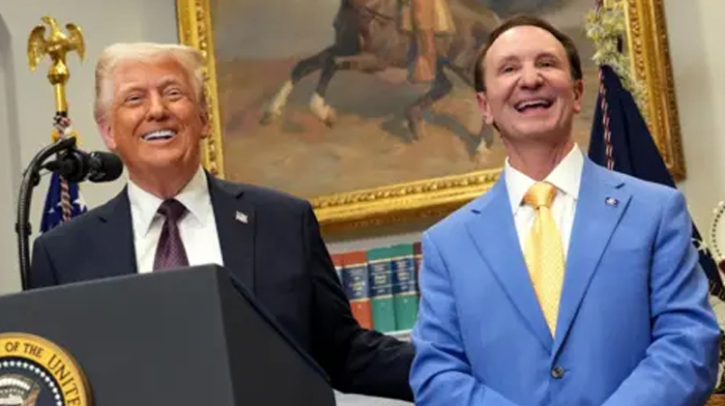
U.S. Special Envoy Jeff Landry, a former Louisiana governor appointed by President Donald Trump, said in a recent interview that Washington believes a deal with Denmark and Greenland is achievable.
He reiterated that President Trump is serious about his objectives and that follow-up negotiations involving U.S. Secretary of State Marco Rubio and Vice President JD Vance are expected to build toward a formal agreement.
Landry also announced plans to visit Greenland in March to continue discussions. According to him, the groundwork has been laid for diplomacy to “play out” in a way that results in a deal.
The U.S. drive comes after months of public statements by Trump suggesting that Greenland, a self-governing territory of the Kingdom of Denmark, is strategically vital and should somehow be aligned more closely with the United States.
Trump has repeatedly voiced concerns about geopolitical rivalries in the Arctic, notably the roles of Russia and China, and has indicated that he sees Greenland’s location and resources as essential to U.S. national security strategy.
However, the claim that a deal is forthcoming is sharply contested by both Greenlandic and Danish leaders, who insist that any decisions about Greenland’s future belong to its people and its government, not to external powers.
Denmark’s Prime Minister and Greenland’s Premier have repeatedly pushed back against Washington’s rhetoric and diplomatic initiatives, characterising them as pressure rather than genuine cooperation and reaffirming their commitment to territorial integrity under international law.
The diplomatic context is tense. Denmark has summoned the U.S. ambassador for explanations over America’s approach, and European allies have voiced concern over the potential ramifications of U.S. efforts to change the status quo in the Arctic.
The issue has also triggered broader debate within NATO about cohesion and respect for member sovereignty, as critics argue that Washington’s posture may undermine alliance unity.
Analysts see multiple layers to the controversy: beyond the raw geopolitical competition for influence in a region made more accessible by climate change, the episode reflects differing conceptions of sovereignty and alliance dynamics.
For Greenlanders and Danes, the island’s autonomy and right to self-determination are paramount. For proponents in Washington, closer ties or a formal agreement with Greenland could reinforce U.S. strategic depth in the Arctic. Balancing these perspectives poses a complex diplomatic challenge.
The assertion that a “deal will be made” underscores the Trump administration’s commitment to its Arctic policy ambitions, but the pathway to such an agreement remains fraught with significant political, legal, and diplomatic hurdles.
Greenland’s leaders have repeatedly emphasised that their future must be decided internally, with free and informed consent from the Greenlandic population a fundamental principle that could shape any discussions ahead.
As the scheduled visit by the U.S. envoy approaches, observers say the coming weeks will be crucial for determining whether diplomacy can navigate these complex tensions or whether the episode will further strain relations between the United States, Denmark, Greenland, and their broader allies.
Sources: The Guardian, Reuters, Xinhua, People’s Daily
BD/AN