
Trump Launches International “Board of Peace” at Davos, Aiming to Redefine Global Conflict Resolution
Published : 22:59, 22 January 2026
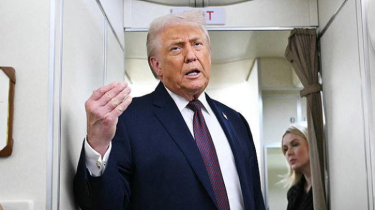
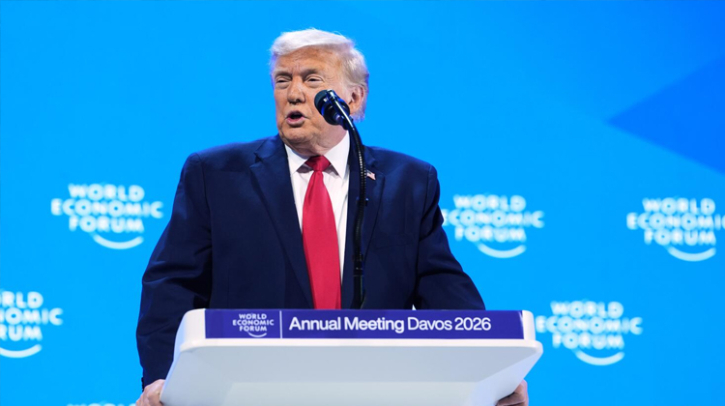
U.S. President Donald Trump formally launched the “Board of Peace”, an ambitious international body aimed at promoting peace and stabilising conflict-affected regions, in a high-profile signing ceremony on the sidelines of the World Economic Forum in Davos on Thursday.
Trump described the event as “a very exciting day, long in the making,” outlining the Board’s mission to help resolve global conflicts and support reconstruction efforts initially envisioned for Gaza but now pitched as a broader mechanism to address world peace.
The Board of Peace was first introduced as part of Trump’s 20-point Gaza ceasefire plan and received endorsement from the United Nations Security Council in late 2025 to oversee Gaza’s ceasefire and reconstruction.
However, its new charter makes no specific reference to Gaza, signalling an expanded mandate to pursue peace more widely. Trump said the organisation is designed to “promote stability, restore dependable governance, and secure enduring peace” in areas affected by conflict.
Key leaders and officials from around 19 participating countries signed the founding charter at the ceremony, including representatives from Turkey, Saudi Arabia, the United Arab Emirates, Pakistan, and others. Trump is expected to serve as the Board’s chairman a position he could hold for life under the organisation’s charter. The Board’s executive leadership reportedly includes senior U.S. figures such as Secretary of State Marco Rubio, special envoy Steve Witkoff, Trump’s son-in-law Jared Kushner, and former British prime minister Tony Blair.
Despite Trump’s enthusiasm, the initiative has drawn significant criticism from major U.S. allies. Several traditional partners, including the United Kingdom, France, Sweden, and Norway, declined to join the Board, citing concerns that it could rival or undermine the United Nations and raise questions about its legitimacy, structure, and leadership. Some European officials specifically objected to invitations extended to controversial figures, including Russian President Vladimir Putin, and have expressed unease about the Board’s governance.
While countries such as Hungary, Bahrain, Morocco, and Kazakhstan attended the signing, many Western capitals remained absent, highlighting divisions over the Board’s direction and purpose. Trump, however, insisted that the Board will work in cooperation with the United Nations and become one of “the most consequential bodies” for global peace.
The Board’s membership model includes an option for permanent seats at a proposed cost of $1 billion, a move that has drawn further scrutiny from global diplomats who worry it prioritises wealthier states and could deepen geopolitical tensions.
Trump reiterated his view that the new body could play a key role in resolving long-standing conflicts, including the Russia-Ukraine wa,r promising that “peace in the world” was achievable through this new forum.
As world leaders continue to debate the Board of Peace’s role and legitimacy, the launch in Davos marks a significant, controversial attempt to reshape the international peacebuilding architecture beyond the traditional United Nations system.
SOURCES: Reuters, Euronews, ABC News, Associated Press
BD/AN