
Delhi Maintains Legal Stance on Sheikh Hasina’s Extradition
Published : 11:22, 14 November 2026
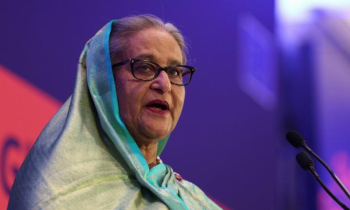
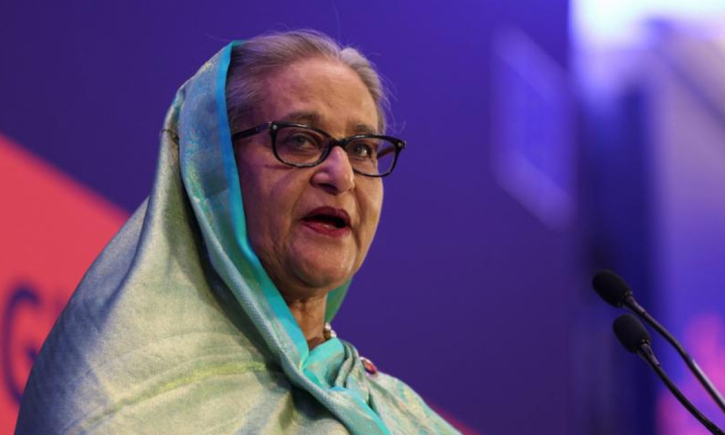
India has reiterated that the extradition of former Bangladesh prime minister Sheikh Hasina will be dealt with through legal channels, while declining to comment on a BBC Bangla report that New Delhi has set two conditions for her return to Bangladesh.
According to the report published on Thursday, Indian officials indicated that Bangladesh would have to arrange Hasina’s return through its military. Since she arrived in India aboard a Bangladesh military aircraft on August 5, 2024, the Bangladesh Army would have to bring her back, either by sending an aircraft to Delhi or receiving her at a designated point along the land border. India is prepared to provide the necessary logistical support, the report said.
The second reported condition is that Bangladesh must guarantee Hasina the opportunity to appeal her death sentence and ensure a fresh trial over the killings during the July uprising.
Hasina fled Bangladesh on August 5, 2024, amid a youth-led mass uprising and has remained in India since then. In November 2025, she was sentenced to death in a case involving crimes against humanity committed during the uprising.
Bangladesh has formally requested her extradition twice: first through a diplomatic note verbale in December 2024, and again after the death sentence was handed down in November 2025. A foreign ministry official said the foreign minister also raised the issue at a bilateral meeting last April. According to the official, India has yet to respond to Bangladesh’s extradition requests.
Speaking on condition of anonymity, the official said Dhaka had received no communication from India regarding the reported conditions. The official added that Bangladesh was unaware of any such request at the political level and that diplomats had not been involved in discussions when Hasina left the country in 2024.
At a regular media briefing in New Delhi yesterday, Randhir Jaiswal, spokesperson for India’s Ministry of External Affairs, was asked about Hasina’s extradition and the two reported conditions.
He said the extradition issue was a legal matter and would be dealt with accordingly. He declined to comment on the other part of the question.
Meanwhile, diplomatic sources in New Delhi said Hasina’s continued presence in India had become an obstacle to improving bilateral relations and posed a challenge to India’s “Neighbourhood First” policy. The delay in improving ties has also drawn criticism within India, they said.
A diplomat, speaking on condition of anonymity, said Prime Minister Tarique Rahman had yet to visit India nearly a year into his tenure. Instead, Bangladesh was moving closer to Türkiye, China and Pakistan, causing discomfort in New Delhi, the diplomat claimed.
The diplomat said a visit would depend on the creation of a conducive environment and the fulfilment of certain preconditions.
“Hasina is not the Dalai Lama. She sought shelter in India when she was in distress, and India provided it. But India cannot afford to keep her indefinitely. She has been advised to use back channels to negotiate and secure the best possible deal for her return,” the diplomat said.
Asked about the postponement of the Bangladesh-India consular dialogue, Jaiswal said India wanted to maintain a positive, constructive and forward-looking relationship with Bangladesh.
He referred to meetings under existing bilateral mechanisms covering trade, railways, water resources and border management.
The next round of the Bangladesh-India consular dialogue, which will also discuss revised travel arrangements, will take place on a mutually convenient date, he said.
“India remains ready to discuss all bilateral issues with Bangladesh through these existing mechanisms, including at the technical level,” Jaiswal added.