
Four Decades On, Bangladesh’s Garment Industry Still Relies on Foreign Professionals
Published : 13:59, 15 November 2026
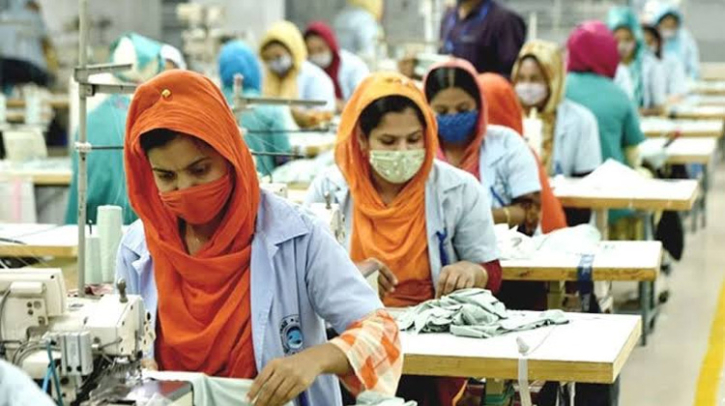
Bangladesh's ready-made garment and textile industry has expanded over more than four decades, driven by workers, entrepreneurs and local managers. The sector has become one of the country's leading export earners and established a strong position in global markets. Yet its dependence on foreign professionals in senior management and technical roles has not been fully reduced.
Foreign nationals are employed in key areas such as production management, merchandising, dyeing and finishing, quality control, compliance, industrial engineering and communication with international buyers. Industry entrepreneurs say foreign specialists contribute to operating modern technology, improving productivity and meeting global buyers' requirements. However, after such a long period of industrial growth, questions remain about why sufficient local expertise has not developed in these fields.
How Many Foreign Workers Are Employed?
According to Faizur Rabbi, deputy director of Invest Bangladesh, a total of 25,026 foreign workers are currently employed across different sectors in the country. This figure covers all industries, not just the garment and textile sectors.
A.S.M. Anwar Parvez, executive director of the Bangladesh Export Processing Zones Authority (BEPZA), said 2,060 foreign workers are employed in EPZs under the authority. A significant number of them work in merchandising and technical roles.
The Bangladesh Investment Development Authority's (BIDA) annual report for the 2024–25 fiscal year shows that 15,898 work permits were approved for foreign employees during that period. Of these, 5,491 were new permits and 10,407 were renewals.
In the previous 2023–24 fiscal year, 5,761 new work permits were approved and 9,947 were renewed. This means the number of new approvals declined slightly, while renewals increased.
However, work permit figures should not be treated as the total number of foreign workers employed in Bangladesh, as they include renewed permits for the same individuals.
Why Does the Industry Depend on Foreign Professionals?
Mohammad Khorshed Alam, director of the Bangladesh Textile Mills Association (BTMA) and chairman of Little Star Spinning Mills, said foreign professionals work in production management, dyeing, production supervision and technical operations. Indian and Sri Lankan nationals account for a comparatively large share of these workers.
He believes many companies recruit foreign employees because of gaps in local workers' skills, experience with modern technology and ability to operate advanced machinery.
Sharing his factory experience, Alam said a facility that once required around 1,100 workers to run production was able to reduce its workforce to approximately 350 after improvements in technology, training and management. He also claimed that a Chinese factory with 54,000 spindles could be operated by only 80 workers. Citing these examples, he stressed the need to narrow the technology and skills gap to improve productivity.
Fazle Shamim Ehsan, executive president of the Bangladesh Knitwear Manufacturers and Exporters Association (BKMEA), said foreign specialists are needed to install and operate new technology, improve production efficiency and train local employees. In many cases, foreign experts work for one to two years before training local staff.
According to his personal estimate, the knitwear sector employs fewer than 100 foreign workers, while the woven garment sector has more than 150. Their monthly salaries may range from Tk 200,000 to Tk 1 million, depending on their positions. He clarified that these figures are his personal estimates, not the findings of an official survey.
A Significant Salary Gap Between Foreign and Local Officials
A 2020 study titled Enrolment of Expatriates in the Ready-Made Garments and Textile Sectors of Bangladesh examined salary differences between foreign and local professionals.
Conducted by Saiful Islam and Tasnim Nabila Islam, the study interviewed 30 experts at different levels across 10 organisations. It found that foreign officials in comparable positions could earn three to five times more than their local counterparts.
The study cited monthly salaries of $5,000 to $10,000 for foreign general managers, compared with Tk 150,000 to Tk 250,000 for local officials. It also noted that a large proportion of foreign professionals were from India and Sri Lanka.
The research identified foreign appointments in production management, merchandising, dyeing, cutting, quality control, industrial engineering and senior management. However, the researchers described it as exploratory research. Given its limited sample, the findings cannot establish the current salary structure or total number of foreign workers across the entire industry.
A human resources professional with 15 years of experience in the garment sector, identified by the pseudonym Md. Rafiqul Islam, said skills shortages are not the only reason companies recruit foreign employees. In some cases, the preferences and influence of international buyers also play a role.
According to him, some factories hire foreign officials to communicate with buyer representatives and quality-control personnel and to retain purchase orders. This can limit opportunities for qualified local officials to receive promotions and take on senior responsibilities.
He further alleged that some companies pay a local official Tk 50,000 for work similar to that performed by a foreign employee who receives Tk 150,000 or more. He also claimed that, in certain cases, contracts show salaries lower than the actual amounts, with the difference paid in cash. For example, an actual salary of Tk 200,000 may be recorded as Tk 100,000. The matter would require responses from the relevant companies and tax authorities to establish the facts.
Concerns Over Irregular Recruitment, Tax Evasion and Money Laundering
Transparency International Bangladesh (TIB) has long raised concerns about irregularities, tax evasion and risks of illicit financial transfers associated with the recruitment of foreign workers.
On February 5, 2020, TIB published a study titled Employment of Expatriates in Bangladesh: Governance Challenges and Way Out. It later released an updated policy paper, Employment of Foreigners in Bangladesh: Challenges of Good Governance and Ways of Overcoming, on March 30, 2024.
The TIB research said some foreign nationals enter Bangladesh on tourist, visa-on-arrival or business visas and work for different organisations without the required work authorisation. It also raised allegations that some legally employed foreign workers have their actual salaries understated to evade income tax.
The research further stated that, in some cases, only one-third of an employee's actual salary is shown as being paid through banks, while the remainder is paid in cash. It also highlighted risks involving non-compliance with prescribed ratios of local and foreign employees and the transfer of money through informal channels such as hundi.
In an estimate published in 2020, TIB said the number of foreign nationals working in Bangladesh at the time could have been at least 250,000. It also estimated that at least $3.15 billion was being sent abroad illegally each year through them, while tax evasion was causing the government an estimated revenue loss of around $1.35 billion. At the exchange rate prevailing at the time, these amounts were equivalent to approximately Tk 264 billion and Tk 120 billion, respectively.
However, TIB itself acknowledged that reliable institutional data on the actual number of foreign workers and the amount of money transferred abroad illegally were unavailable. Therefore, those estimates should not be treated as statistics reflecting the current situation.
TIB recommended establishing a central database of foreign employees, determining workforce requirements by sector, regularly updating salary and income tax information, and strengthening coordination and oversight among government agencies.
Official Figures on Remittances by Foreign Workers
There is also an official record of money legally transferred abroad from the earnings of foreign nationals working in Bangladesh.
On June 24, 2024, then Finance Minister Abul Hassan Mahmood Ali told Parliament that foreign nationals living in Bangladesh had sent $130.58 million to their respective countries during the first 10 months of the 2023–24 fiscal year, from July to April.
Indian nationals sent $56 million, Chinese nationals $14.56 million and Sri Lankan nationals $12.71 million. Citizens of Japan, South Korea, Thailand, the United Kingdom, Pakistan, the United States and Malaysia also transferred money abroad.
The finance minister said Bangladesh Bank did not maintain complete annual income records for foreign nationals residing in the country. As a result, the figures cover legal transfers by foreign nationals across all sectors, not just employees in the garment and textile industries. It is therefore not possible to determine precisely how much money is being transferred abroad from those two sectors.
Under a Bangladesh Bank directive issued on December 27, 2021, foreign employees may transfer up to 80 per cent of their net income abroad at any time after paying taxes. The remaining 20 per cent may also be transferred, subject to certification from the relevant authority after tax assessment.
Initiatives to Develop Local Expertise
The Bangladesh Garment Manufacturers and Exporters Association (BGMEA), the industry's leading trade body, has also been unable to provide specific figures on the number of foreign employees or the amount of money they transfer abroad.
BGMEA President Mahmud Hasan Khan said the association had written to its member factories seeking information on the matter. He also noted that entrepreneurs in the garment industry were concerned about recent labour unrest and broader instability in the sector.
Several initiatives are being taken to improve local skills and reduce dependence on foreign employees.
On June 25, 2026, BGMEA, BKMEA, BGMEA University of Fashion and Technology (BUFT) and the Export Promotion Bureau (EPB) signed separate memorandums of understanding to train 22,815 workers, officials and mid-level managers over three fiscal years.
The training programme covers machine operation, compliance, production planning, inventory management and leadership skills.
On September 13, 2026, Mahdi Amin, adviser and spokesperson at the Prime Minister's Office, said that a fully local workforce could be developed in the garment industry if the necessary skills, quality education and working conditions were ensured.
Technology Transfer and Training Are Key
Industry stakeholders believe the need for foreign specialists cannot be entirely ruled out. Their experience can be valuable, particularly in adopting new technologies, modern production systems and international standards.
However, foreign recruitment needs to be accompanied by training for local employees, the transfer of technology and knowledge, and measures to improve the capabilities of local officials. Creating opportunities for local professionals to earn promotions and assume leadership roles in key management and technical positions is equally important.
Despite more than four decades of industrial development, dependence on foreign professionals in senior management and technical roles has not been fully eliminated. Identifying the underlying reasons requires a coordinated system for recording information on foreign employees' recruitment, skills, salaries, tax payments and overseas transfers.
A long-term plan is needed to identify which positions can be filled by local professionals, where skills gaps remain and how long it will take to address them. Without such a strategy, Bangladesh may continue to expand production and exports in one of its largest export sectors while remaining dependent on foreign expertise in senior management and advanced technical roles.