
Algeria Marks the Historic Student Strike of 19 May 1956
Published : 16:10, 18 May 2026
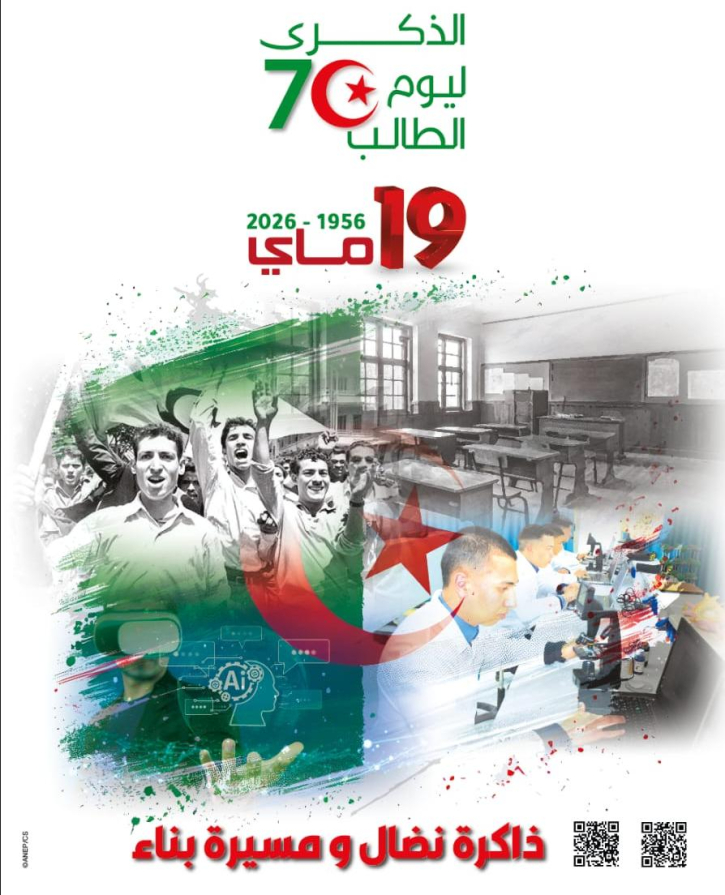
Algeria is commemorating the historic student strike of 19 May 1956, a defining moment in the country’s struggle for independence from French colonial rule.
On that day, hundreds of Algerian students, including future doctors, engineers, nurses, teachers, and intellectuals, left their classrooms and universities to join the national liberation movement led by the National Liberation Front.
The strike was organized following a call by the General Union of Algerian Muslim Students, which urged students to abandon their studies and support the revolution against French colonial occupation.
At the time, France maintained that Algeria’s educated class would remain detached from the independence movement. However, the student strike demonstrated that Algerian intellectuals and youth were fully committed to the struggle for national liberation.
The movement came amid escalating repression by French colonial authorities. In 1956, the French government deployed hundreds of thousands of troops to Algeria and intensified military operations, mass arrests and crackdowns on activists and student leaders.
The 19 May strike quickly spread across Algeria and among Algerian student communities in France. Students from medicine, engineering, law, science and humanities faculties joined the protest, suspending their studies indefinitely.
Many students directly joined the armed resistance in the maquis alongside the fighters of the National Liberation Army, while others supported the movement through medical services, logistics, communications and underground political activities.
Medical and pharmacy students played a critical role in treating wounded fighters and organizing field healthcare services in remote resistance areas. Engineering students also contributed their technical expertise to support the liberation movement’s infrastructure and operations.
French authorities responded by revoking scholarships, arresting activists, and eventually dissolving UGEMA in 1958. Despite the crackdown, the organization continued operating from exile in Tunis and maintained its support for the independence movement until Algeria gained independence on 5 July 1962.
Historians regard the student strike as a turning point that proved the Algerian revolution was a nationwide movement supported by all segments of society, including its educated youth.
Following independence, many former student activists returned to help build the new Algerian state as ministers, professors, doctors, diplomats, and engineers.
Today, Algeria continues to highlight education and youth development as central pillars of national progress. Since independence, the country has significantly expanded its higher education system, establishing universities and educational institutions across all regions.
According to official figures, Algeria now has more than 100 higher education institutions serving nearly two million students, with women representing a majority of university enrolment.
Commemorations marking the anniversary of 19 May continue to honour the sacrifices of the generation that left behind academic careers to fight for the freedom and future of Algeria.
Subject-