
Mecca Joint Defence Pact: Strategic Assessment Crucial for Bangladesh
Published : 13:27, 26 August 2026
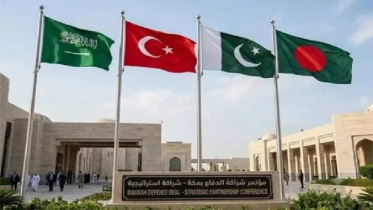
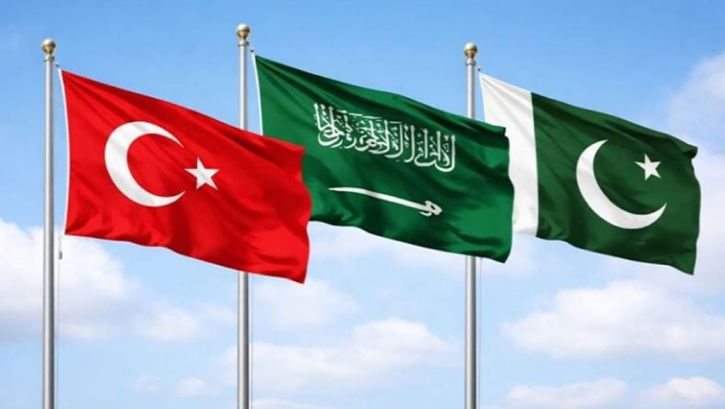
The recently signed Mecca Joint Defence Pact between Saudi Arabia, Türkiye and Pakistan has drawn growing international attention, with policymakers and analysts closely observing its potential implications for regional security, defence cooperation and the evolving geopolitical landscape.
Experts believe that if Bangladesh considers participating in a similar defence framework in the future, the country will need to conduct a comprehensive assessment of its potential impact on national security, foreign policy, economic interests and regional relations.
According to analysts, any new strategic partnership should be evaluated in line with Bangladesh's long-standing commitment to maintaining a balanced and non-aligned foreign policy.
One of the key features being discussed in relation to the agreement is the concept of collective defence. Reports and analyses suggest that an armed attack on one of the participating countries could be treated as a matter of collective concern. However, important questions regarding the implementation mechanism, command structure and responsibilities of participating countries may require further clarification.
Former ambassador and President of the Bangladesh Enterprise Institute, Humayun Kabir, believes that a clear understanding of the agreement's structure and participation process would be essential before Bangladesh considers any potential involvement.
He said that if Bangladesh receives a formal proposal or invitation in the future, the matter could be examined carefully from the perspective of national interest.
Security analyst Air Commodore (Retd.) Ishfaq Ilahi Choudhury said that Bangladesh should evaluate any military or defence cooperation within the broader context of its national security requirements and foreign policy priorities.
According to him, such decisions should consider not only potential military benefits but also possible diplomatic, economic and regional implications.
Analysts note that countries around the world are increasingly reassessing their security and defence policies in response to changing geopolitical realities. Developments in the Middle East, South Asia and other regions are encouraging governments to explore new forms of strategic cooperation.
Independent researcher Altaf Parvez believes that such initiatives may also have important economic dimensions. The Gulf region remains a major global centre for trade, energy and investment, making regional security and stability important for the wider international economy.
For Bangladesh, experts suggest that any potential defence cooperation should also be assessed in relation to economic interests, energy security, foreign investment and international trade.
Professor Sabbir Ahmed of the Department of Political Science at the University of Dhaka said that Bangladesh's geographical position, defence capabilities and long-term national interests should be carefully considered before making any strategic commitment.
He emphasised the importance of consultations with relevant experts, policymakers and stakeholders, along with a comprehensive assessment of potential benefits and risks.
Observers believe that Bangladesh's immediate priority should be to closely monitor emerging trends in international defence cooperation. Before considering participation in any new framework, policymakers would need to examine the agreement's practical structure, the responsibilities of member states, potential security and economic benefits, and its long-term diplomatic implications.
Bangladesh has traditionally pursued its foreign policy based on the principle of “Friendship to all, malice towards none.” While changing global circumstances may create new opportunities for strategic cooperation, the country's primary focus will remain the protection of national interests, regional stability and economic development.
According to observers, the Mecca Joint Defence Pact could have implications beyond military cooperation, potentially influencing regional security, economic stability and future geopolitical alignments.
Therefore, if Bangladesh considers engagement with such a framework in the future, a decision based on comprehensive analysis, expert consultation and long-term national interests would be essential.