
Pakistan Police Use Fishing Nets to Counter Explosive Drone Attacks
Published : 11:44, 7 October 2026
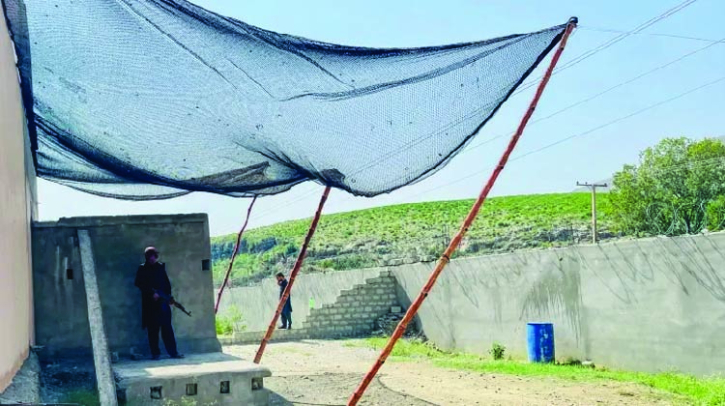
Explosive-laden drones have emerged as a new security threat for Pakistan’s security forces, particularly in the northwestern province of Khyber Pakhtunkhwa. With limited resources and equipment, local police have adopted a low-cost method to reduce the danger: hanging fishing nets several metres above police checkpoints.
At the Sarki Payala police checkpoint in Hangu district, Inspector Fayyaz Khan and his colleagues took shelter during an explosive drone attack on April 16. The checkpoint, located around 30 kilometres from the Afghan border, also came under gunfire from armed militants during the attack. The Tehreek-e-Taliban Pakistan (TTP) later claimed responsibility.
Khan said the confrontation lasted nearly seven hours. A driver of an armoured vehicle was killed and a police constable was injured. He recalled the situation as extremely frightening, saying he was unsure whether he and his colleagues would make it home alive.
Following the attack, police installed a black fishing net above the Sarki Payala checkpoint. Officers say the net was first installed around two months ago and there have been no further drone attacks on the post since then.
Police believe a drone flying over the checkpoint could become trapped in the net and be disabled. Even if a drone explodes above the net, they believe the structure could potentially reduce the impact of the blast and flying metal fragments.
Hangu police official Tariq Habib said a standard checkpoint can be covered with such a net for around 400,000 Pakistani rupees, or approximately $1,435. The police have begun installing similar protection at vulnerable police stations and checkpoints across the district and have requested additional funding from the provincial government.
According to Khyber Pakhtunkhwa police spokesperson Abdul Salam Khalid, similar nets have been installed at police posts and checkpoints in at least five other high-risk districts, including Kohat, Karak, Bannu, Lakki Marwat and Dera Ismail Khan. Some military positions in the province are also using anti-drone nets.
The measure comes as armed groups have changed their tactics. Alongside firearms and mortars, militants are increasingly using drones and quadcopters in attacks. Police and military personnel have been among their main targets. Pakistani authorities have repeatedly accused Afghanistan’s Taliban government of allowing TTP militants to operate from safe havens, while Kabul has denied the allegations and described the violence as Pakistan’s internal security problem.
One of the deadliest attacks in the Hangu area occurred on July 29, when a police post was targeted by a bomb-carrying quadcopter followed by a ground assault. At least 11 police officers were killed and 28 were wounded, while 15 attackers were also reported killed. The TTP claimed responsibility for the attack.
Police records show at least 16 attacks have been documented in Hangu this year, making the district one of the province’s more sensitive areas.
Police officer Zeeshan Khan said there had been no further drone or quadcopter attacks on the Sarki Payala and nearby Baliamena checkpoints since the nets were installed. He described the nets as an “additional layer of security” and estimated that they could potentially reduce damage by 40 to 50 percent.
Security experts, however, have questioned that estimate. Imtiaz Gul, executive director of the Islamabad-based Center for Research and Security Studies, said installing nets at specific checkpoints could be an inexpensive measure, but it may not address the broader threat because police posts are not necessarily the only targets of drone attacks.
Security analyst Fida Adil said the idea was not entirely new and appeared to draw on the use of military camouflage nets. Similar nets have also reportedly been used in Ukraine to counter Russian drones. However, he cautioned that the effectiveness of fishing nets against explosive drones would depend on their design and installation. He said the claimed 40–50 percent reduction in damage would need proper testing.
Khyber Pakhtunkhwa police spokesperson Abdul Salam Khalid said police had already conducted a test of the method in the Kohat area. During the test, an explosive was dropped onto a net but did not detonate.
Inspector Fayyaz Khan acknowledged that fishing nets above checkpoints are not a complete solution. Still, he said the measure gives officers some additional sense of protection while on duty. Even if it cannot eliminate the threat, he believes it may help reduce potential damage during an attack.