
Sewing Machines Open New Doors for 100 Women in Bandarban
Published : 18:07, 19 September 2026
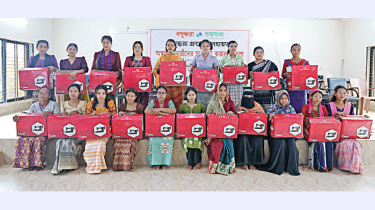
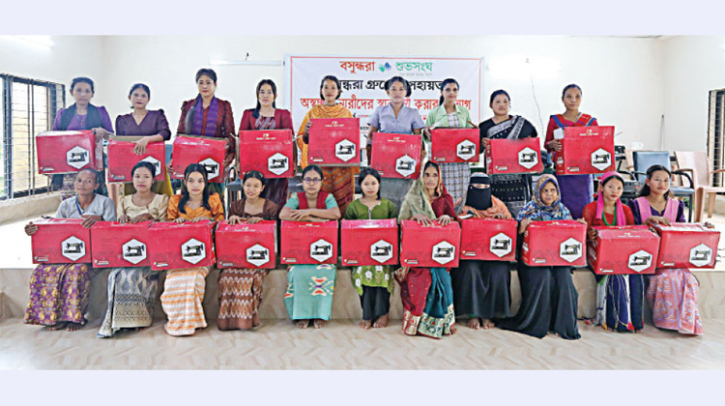
In a bid to create self-employment opportunities for underprivileged women living in the remote hill areas of Bandarban, Bashundhara Shuvo Sangho has distributed sewing machines among 100 women from five upazilas of the district.
Following sewing training, each participant received a sewing machine to help her generate income. As part of the organisation’s environmental awareness initiative, each woman was also given two tree saplings.
The programme was organised with support from Bashundhara Group as part of its ongoing sewing training and machine distribution initiatives across different parts of Bangladesh.
The Bandarban programme began in Lama and was gradually extended to Alikadam, Bandarban Sadar, Rowangchhari and finally Ruma. Twenty women from each of the five upazilas received the assistance.
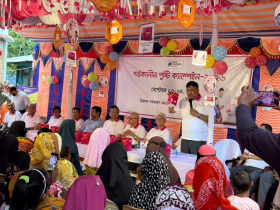
The final phase of the programme was recently held at Munlai Para Cultural Centre in Ruma. After travelling through difficult and remote hill routes, representatives of Bashundhara Shuvo Sangho handed over sewing machines to 20 women from both indigenous and Bengali communities.
Ruma Police Station Officer-in-Charge (OC) Manas Barua, Upazila Women Affairs Officer Md Javed Raujān, Ruma Agrobansha Orphanage Director Naindia Ther, local para chiefs and BNP leaders were present at the event.
In many remote parts of Ruma, access to education and employment opportunities remains limited. Despite financial hardship, many women continue to support their families while pursuing their education. For them, sewing training and a sewing machine could provide an opportunity to earn from home and continue their studies.
Naiuching Marma, who grew up at Ruma Agrobansha Orphanage, is one of the beneficiaries. Having lost her parents at an early age, she spent her childhood at the orphanage and continued her education there. Receiving a sewing machine has strengthened her determination to become financially independent.
“Since childhood, I have grown up in an orphanage. This sewing machine has given me even more courage to stand on my own feet,” Naiuching Marma said.
Another beneficiary, Chamaya Mro, also sees the machine as a means of building a better future. Her father, Menoyang Mro, has died, while her mother is suffering from mental illness. Chamaya and her sister support their family through shifting cultivation, while she is also pursuing honours studies at Bandarban Government College.
“This will create a new source of income for me and help me continue my studies. I am deeply grateful to Bashundhara,” Chamaya Mro said.
Ruma OC Manas Barua described the distribution of sewing machines as a meaningful initiative for helping disadvantaged women in remote areas become self-reliant. He said the initiative could enable women to earn an income while also contributing to the financial wellbeing of their families.
Upazila Women Affairs Officer Md Javed Raujān said the combination of training and sewing machines is giving women both practical skills and an opportunity to turn those skills into income.
“Such initiatives are helping women move towards economic independence. We hope programmes aimed at women’s empowerment and social welfare will continue,” he said.
Naindia Ther, director of Ruma Agrobansha Orphanage, also praised the initiative, saying training and sewing machines could help women and adolescent girls in remote communities acquire skills and pursue self-employment.
According to Bashundhara Shuvo Sangho, more than 3,000 women across different parts of Bangladesh have already benefited from its sewing training and machine distribution programmes.
The initiative in Bandarban is part of that broader effort to help disadvantaged women develop skills, earn income and build greater financial independence.
For many women in the remote hills, the sewing machine is more than just a piece of equipment—it represents a new opportunity to earn, continue their education and build a more secure future.