
Advance Income Tax on Commercial Vehicles Set to Rise in Proposed Budget
Published : 17:37, 11 June 2026
The proposed national budget for FY2026-27 includes significant increases in Advance Income Tax (AIT) on commercial vehicles, while several new categories of vehicles are set to be brought under the tax net for the first time.
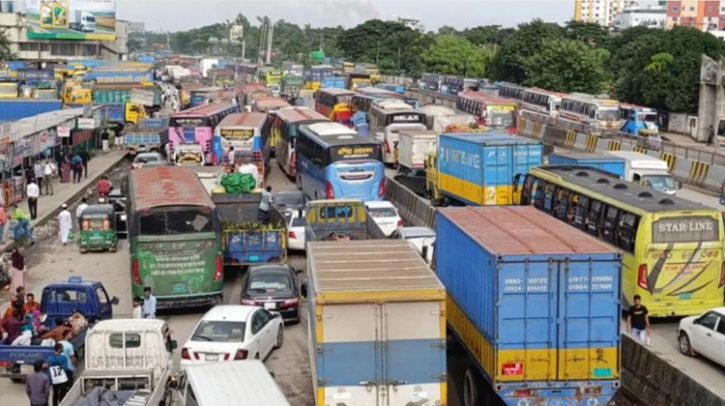
Under the proposed structure, AIT rates for buses, trucks, lorries, air-conditioned minibuses and coasters, covered vans, prime movers, pickup vans, human haulers, auto-rickshaws, and taxi cabs will increase by 50 percent to 100 percent, depending on vehicle type and capacity.
According to the proposal, the advance tax on a 52-seat bus will increase from Tk 16,000 to Tk 25,000. For minibuses, the tax will rise from Tk 11,500 to Tk 20,000, while air-conditioned coasters will face an increase from Tk 16,000 to Tk 25,000.
The freight transport sector will also see higher tax obligations. The AIT on trucks with carrying capacities between 5 and 20 tonnes is proposed to increase from Tk 16,000 to Tk 30,000. For trucks exceeding 20 tonnes, the tax is expected to jump from Tk 16,000 to Tk 50,000.
The government also plans to make payment of advance income tax mandatory during vehicle registration or fitness certificate renewal. Authorities may refuse registration or fitness renewal applications if proof of tax payment is not submitted.
In addition, amendments to the tax framework will introduce several new categories of vehicles into the AIT system. These include cranes, tractors, dump trucks, cargo vans, excavators, dredgers, rollers, concrete mixers, and other heavy-duty and special-purpose vehicles.
Under the proposal, advance income tax for these heavy and specialized vehicles could be set at up to Tk 50,000 annually.
Officials say the measures are aimed at strengthening tax administration, improving revenue collection, and bringing greater transparency to the taxation of commercial transport operations. However, industry stakeholders warn that higher tax costs could eventually increase transportation expenses and logistics costs across various sectors of the economy.