
Cooked Mid-Day Meal Pilot to Start Soon with Mothers’ Involvement: Bobby Hajjaj
Published : 18:23, 26 August 2026
Bangladesh is preparing to launch a pilot programme for serving cooked meals to primary school children with the direct involvement of mothers, following experiences from Sri Lanka and Tamil Nadu in India, said State Minister for Primary and Mass Education Bobby Hajjaj.
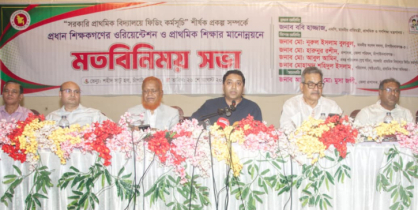
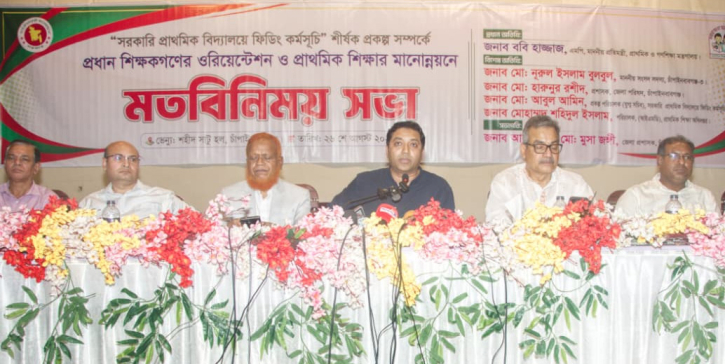
He made the remarks while speaking as the chief guest at an orientation programme for headteachers and a discussion meeting on improving the quality of primary education at Shaheed Satu Hall in Chapainawabganj.
Bobby Hajjaj said the government would test different models under which vegetables, eggs, fish and other necessary food items would be procured from local markets and cooked and supplied under the supervision of mothers.
“The method may vary, but the government’s main objective is to ensure that every child receives safe, quality and nutritious food on time,” he said.
Regarding the mid-day meal programme, the state minister said effective monitoring by Mothers’ Committees had significantly reduced irregularities and complaints. Direct involvement of mothers at the local level was helping improve transparency and accountability in food quality, supply and distribution.
He said Mothers’ Committees at every school had been instructed to play a more active role. If there were any problems with the quality, smell, taste or delivery of food, the committees would be required to reject it immediately and inform the relevant authorities.
Speaking about primary education, Bobby Hajjaj said the government had two major goals: ensuring that no child remains outside school and providing quality education to every child.
He stressed the need for stronger roles by teachers and field-level education officials in ensuring student attendance, classroom activities, learning progress and a proper educational environment.
The state minister said changes were being introduced to the teacher training system so that teachers would not have to remain away from schools for extended periods for training, which could contribute to teacher shortages.
He also mentioned initiatives involving performance-based promotion, a new transfer policy and measures for teachers’ professional development. A provision for school-specific hardship allowances for teachers working in remote areas was also being considered under the new policy.
Bobby Hajjaj said efforts were underway to fill vacant posts, recruit headteachers and ensure adequate numbers of teachers. Initiatives were also being taken to provide necessary support staff, including night guards and MLSS personnel, at schools.
On infrastructure, he said the government was working on movable infrastructure models for schools in areas vulnerable to repeated relocation because of river erosion and other factors. Successful models implemented in remote and high-risk areas would be reviewed for possible adoption under the government system.
The state minister said five areas—curriculum, teachers, monitoring, infrastructure and technology—were crucial to improving primary education. Coordinated reforms and development in these areas, he said, would be key to bringing meaningful improvements to the country’s primary education system.
Chapainawabganj Deputy Commissioner Abu Saleh Md Musa Jangir chaired the programme. Chapainawabganj-3 MP Md Nurul Islam Bulbul, District Council Administrator Md Harunur Rashid and Feeding Programme Project Director Md Abul Amin attended the event as special guests. Headteachers from government primary schools across different upazilas of Chapainawabganj were also present.