
Tourists Among 25 Killed in Devastating Nightclub Blaze in Goa’s Arpora
Published : 01:03, 8 December 2025
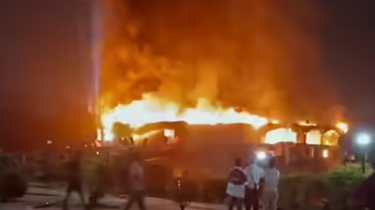
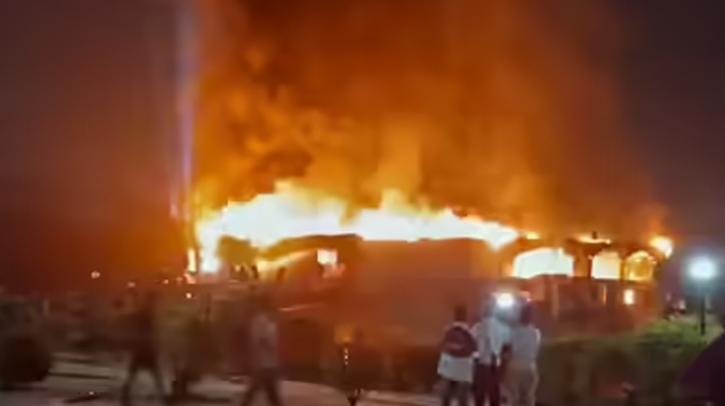
A late-night fire at a popular island nightclub in Goa’s Arpora village has killed at least 25 people, including both staff and tourists, and injured dozens more, prompting urgent questions over fire-safety compliance in one of India’s busiest tourist corridors.
According to state authorities, the blaze broke out shortly after midnight at Birch by Romeo Lane, a restaurant-cum-nightclub built on a small island in a lagoon in North Goa. Initial estimates suggest that around 100 patrons and employees were inside the venue when flames rapidly spread through the structure.
Officials report that among the 25 confirmed dead are at least 14 members of staff and four tourists, while approximately 50 others sustained injuries ranging from mild smoke inhalation to severe respiratory distress and burns.
Most victims are believed to have died from suffocation after becoming trapped in the basement and kitchen areas, which reportedly lacked adequate emergency exits and ventilation. Only three of the dead are thought to have succumbed primarily to burn injuries.
Survivors described scenes of panic as power failed, visibility dropped due to thick smoke, and people rushed towards stairways and lower floors, inadvertently moving into more hazardous, poorly ventilated spaces.
Emergency services received the first distress call at around 12:04 am local time. Fire crews faced significant challenges reaching the site due to a narrow access route and the club’s island-like location, forcing some vehicles to halt hundreds of metres away and extend hoses across walkways.
The fire was brought under control after nearly two hours of intensive operations, but rescue and recovery efforts continued into the morning as responders searched the charred structure for victims and transported the injured to Goa Medical College Hospital in Bambolim. By midday, authorities reported that six patients remained in serious condition under specialist care.
The precise cause of the fire remains under investigation. Early accounts pointed to a possible gas cylinder explosion in or near the kitchen, while subsequent statements from state officials have highlighted the role of electrical pyrotechnics or so-called “electric firecrackers” used during live performances.
A magisterial inquiry has been ordered to reconcile conflicting witness reports, establish the ignition source and sequence of events, and determine whether criminal negligence contributed to the scale of the disaster.
Police have registered a case against the club’s owners and management, citing alleged violations of fire-safety regulations and possible operation in defiance of earlier demolition or compliance notices issued by local authorities.
Preliminary regulatory reviews suggest that key safety norms were not followed. Local officials and media reports indicate that the venue had a single primary access bridge, inadequately marked escape routes, and no functional emergency exits from the basement, where many staff were working when the fire spread.
The nightclub had previously attracted attention from planning and coastal-zone authorities and had reportedly been served with demolition or rectification notices that were subsequently stayed on appeal.
The incident has reignited broader concerns about enforcement gaps, overcrowding, and lax safety standards at entertainment venues across India, where a series of deadly fires in restaurants, hospitals, and public halls in recent years has repeatedly exposed structural and regulatory weaknesses.
Goa Chief Minister Pramod Sawant has described the tragedy as “deeply painful” for the state and announced a formal inquiry alongside ex gratia compensation for the families of those killed and for the injured.
At the federal level, Prime Minister Narendra Modi has expressed condolences and offered additional compensation from national relief funds, while directing central agencies to support the state government’s response.
Opposition leaders have framed the fire as a grave failure of governance and regulatory oversight, calling for a transparent investigation that assigns responsibility not only to the nightclub’s owners and managers but also to public officials who may have failed to enforce safety norms.
In the aftermath, calls are growing for a comprehensive safety audit of nightclubs, bars, and other high-density venues across Goa, which welcomed more than five million visitors in the first half of this year and relies heavily on nightlife and entertainment as a core pillar of its tourism-driven economy.
Urban planners, fire-safety experts, and civil-society advocates are urging systematic inspections, strict licensing linked to demonstrable compliance, and mandatory staff training in evacuation procedures and first response.
For the families of those who died and for survivors still recovering in the hospital, however, the immediate reality is one of profound loss.
What was intended as a night of leisure on Goa’s famed party circuit has become a stark reminder of the human cost of weak safety cultures and fragmented regulatory enforcement.
Sources: BBC, Reuters, The Guardian, Indian Express, Times of India, Associated Press
BD/AN