
Media Campaigns for Awami League Also Banned, Says State Minister for Information
Published : 19:02, 10 November 2026
State Minister for Information and Broadcasting Yaser Khan Chowdhury has said that, alongside the activities of the Bangladesh Awami League and its affiliated, associate and fraternal organisations, their publicity and promotional activities through the media, online platforms and social media are also prohibited.
He said a notification issued on May 12, 2025, banned all activities of the Awami League and its affiliated, associate and fraternal organisations. The ban also covers publications and promotional activities through the media, online platforms and social media. He said media outlets should take this into consideration.
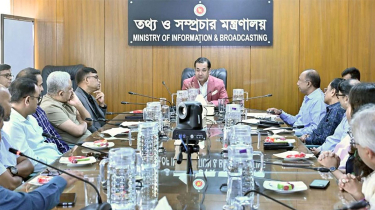
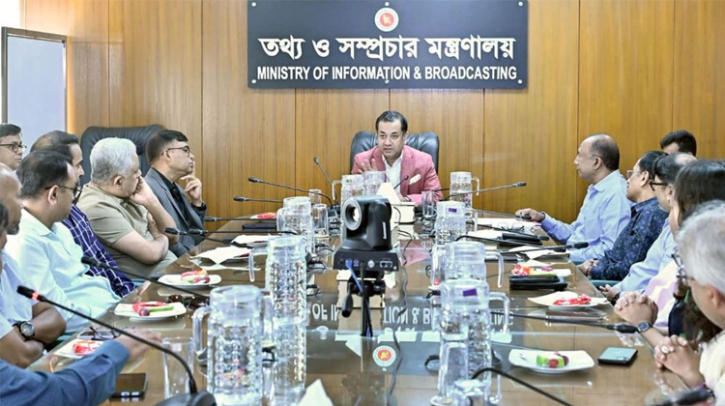
The state minister made the remarks while responding to questions from journalists after a meeting with a delegation of the Bangladesh Broadcast Journalists Centre (BJC) at the conference room of the Ministry of Information and Broadcasting at the Secretariat on Tuesday (November 10).
Commenting on recent arson incidents, Yaser Khan Chowdhury said those involved in such acts pursued a politics of destruction. He alleged that the party had been associated with arson, enforced disappearances, killings and other acts of violence since its inception.
He said small groups could come out at night, chant slogans and leave, or set fire to vehicles and buses before fleeing. However, law enforcement agencies were active in addressing such incidents. Several people had already been arrested in different areas, and steps were being taken to bring those involved in terrorist activities to justice, he added.
The state minister further said Sheikh Hasina, whom he described as the mastermind behind arson terrorism, would be brought back to Bangladesh and put on trial. He said the people of Bangladesh wanted to see the trial.
Earlier, the meeting with the BJC delegation discussed various demands and challenges facing broadcast journalists. The delegation highlighted the financial difficulties of television channels, the need to improve journalists' salaries and benefits, professional independence and the modernisation of the broadcasting sector.
Yaser Khan Chowdhury said the Bangladesh Nationalist Party (BNP) government believed in media freedom and wanted responsible journalism. He said the government's expectation was that people would receive accurate information through objective news reporting.
He also said that, following the prime minister's instructions, the government had not interfered in the operations of any electronic or print media outlet and had no intention of controlling or interfering with the media in the future.
The state minister said the delegation had presented several proposals concerning ways to increase television channels' revenue, improve digital platforms and make necessary changes to existing policies. The delegation would submit its demands to the ministry in writing, after which the government would review them and take necessary decisions.
He added that discussions had also been held on allocating a share of subscriber-level revenue to television channels as a way to increase their income.
The delegation said television channels in Bangladesh were largely dependent on advertising revenue. Under the current advertising rates, many channels were finding it difficult to cover operating costs and pay journalists regularly. It therefore proposed that a portion of subscriber-level revenue collected by cable operators be shared with television channels.
According to the delegation, the Media Reform Commission's report recommended introducing such an interim arrangement until the digitalisation process was completed. The commission formulated its recommendations after consultations with around 55 stakeholders. The delegation urged the government to take steps to implement the key recommendations.
The delegation also stressed the need to establish a media commission modelled on the Bar Council. It said such a body could help address the challenges facing newspapers, television channels and digital media in a coordinated manner.
The representatives further called for media owners to be held accountable to ensure journalists receive proper salaries, benefits and professional recognition. They said responsible and professional journalism would be difficult without adequate remuneration and workplace benefits.
The delegation also expressed hope that the environment of non-interference in the media under the current government would continue.
Subject-