
Bangladesh Must Move Forward on Desired Development Path: Dr. Titumir
Published : 12:18, 19 April 2026
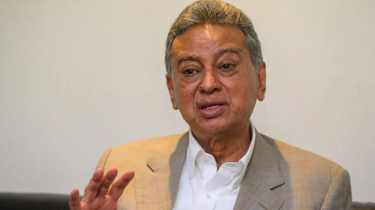
Prime Minister’s Adviser on Finance and Planning Dr. Rashed Al Mahmud Titumir has said that Bangladesh must advance toward its desired development path by ensuring the democratization of the economy, increasing investment, and securing energy supply.
He said ensuring an uninterrupted energy and electricity supply is essential for boosting investment. For this, strategic reserves need to be developed while maintaining policy continuity and providing fiscal support, regulatory oversight, and incentives where necessary.
He made the remarks while speaking as the chief guest at a seminar titled “Economic Stability, Financial Capacity and the Government’s 180-Day Action Plan,” organized by the Economic Reporters Forum (ERF) in Dhaka today.
Distinguished Fellow of the Centre for Policy Dialogue (CPD) Professor Dr. Mustafizur Rahman attended the seminar as a guest of honor.
The seminar, chaired by ERF President Daulat Akter Mala, was also attended by President of the Bangladesh Knitwear Manufacturers and Exporters Association (BKMEA) Mohammad Hatem and President of the Bangladesh Garment Manufacturers and Exporters Association (BGMEA) Mahmud Hasan Khan as special guests.
Dr. Titumir said the BNP’s election manifesto has outlined three major goals: building a trillion-dollar economy by 2034, establishing a new economic model based on investment, production, and employment, and increasing government spending on social sectors such as education and health to 5 percent of GDP. The manifesto also emphasizes democratizing the economy to ensure “an economy for all.”
He noted that Bangladesh has achieved progress despite facing numerous crises in the past, including war devastation, famine, and global oil price shocks. According to him, these experiences can provide valuable guidance for future reforms and policymaking.
Dr. Titumir said human creativity and resilience are the country’s greatest assets for economic development, which have already been reflected in agriculture, livestock, and small enterprises. He also stressed the need to promote renewable energy by encouraging private sector initiatives and developing appropriate incentive structures.
He added that sustainable national progress cannot rely solely on government incentives, and the private sector must play a stronger role.
The adviser said attracting foreign investment is not possible without strengthening domestic investment capacity. He also emphasized utilizing region-based economic potential and improving regulatory capacity in sectors such as pharmaceuticals, leather, and light engineering to diversify exports.
Dr. Titumir said sustainable reforms require not only legal frameworks but also social harmony, inclusive development, and media freedom. He expressed optimism that realistic policies could bring visible progress to the economy within the next few years.