
Green Building Designs Could Transform Dhaka’s Housing Landscape
Published : 15:05, 5 October 2026
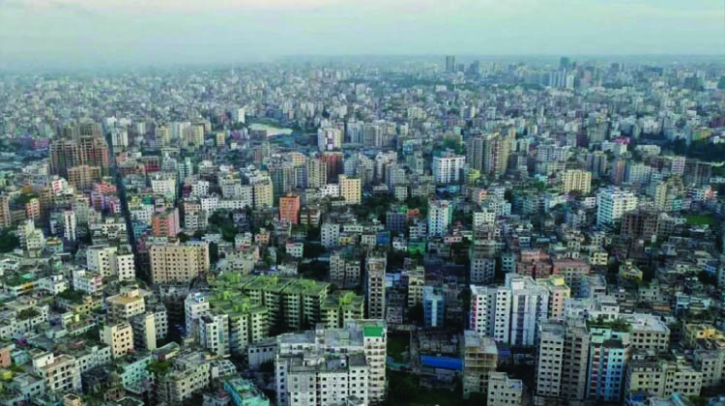
Finding a home in Dhaka is no longer simply a matter of securing a roof over one’s head. It is increasingly linked to the cost of living, commuting expenses, electricity and water bills, maintenance costs, environmental sustainability and the need to leave a livable city for future generations.
A flat cannot be considered truly affordable simply because its purchase price or rent is low. If living in that building results in higher electricity bills, increased maintenance costs or expensive and time-consuming daily commutes, the actual cost of housing rises significantly.
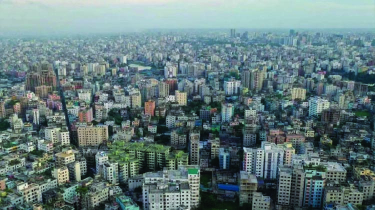
Dhaka has gradually expanded from a trading centre on the banks of the Buriganga into a vast metropolitan city. Since becoming the capital of Mughal Bengal in 1610, the city has undergone numerous transformations. As the capital of independent Bangladesh, Dhaka is now the country’s primary centre for education, employment, business and economic activity, driving continued demand for housing.
Against this backdrop, the major challenge for Dhaka’s housing sector is no longer simply constructing more buildings. It is ensuring safe, environmentally friendly, healthy and economically sustainable housing.
October 5 is World Habitat Day. The theme for 2026 is “Adequate Housing for All.” The theme highlights how housing is closely connected not only to basic human needs but also to urban planning, the economy and the environment.
This makes it increasingly important to promote the concept of green and affordable buildings as part of efforts to address Dhaka’s housing challenges.
Housing affordability goes beyond purchase price
Housing affordability should not be measured solely by the selling price of a flat or monthly rent. Electricity, water, maintenance, repair and transportation costs are also part of the overall cost.
For example, renting a cheaper home far from the workplace can significantly reduce the financial benefit through higher daily commuting expenses. Similarly, poorly planned buildings without adequate natural light and ventilation can require greater use of air conditioning, increasing electricity bills.
This makes it important to consider life-cycle costs from the initial design stage of a building.
The cost of constructing a building does not represent its complete economic picture. Expenses for electricity, water, maintenance and repairs over the following 10, 20 or 30 years should also be taken into account.
A building with a lower initial construction cost is not necessarily more affordable. A planned investment at the beginning to improve energy and water efficiency can reduce household expenses over the long term.
Green buildings do not necessarily mean higher costs
There is still a perception in Bangladesh that green or environmentally friendly buildings necessarily require substantial additional investment. In reality, many effective green-building measures can be incorporated at the design stage without relying on expensive technologies.
Proper building orientation, appropriate window placement, maximum use of natural light and ventilation, shading arrangements and the use of suitable locally available construction materials can improve a building’s efficiency.
Although some measures may require additional investment initially, they can help reduce electricity, water and maintenance costs over time.
Green buildings, therefore, should not be viewed solely as an environmental initiative. They can also help reduce household expenses and improve the economic efficiency of buildings.
HBRI-DESH Framework offers a local approach
Considering Bangladesh’s climate, disaster risks, locally available construction materials and socioeconomic conditions, the Housing and Building Research Institute (HBRI) has developed the HBRI-DESH Framework.
The framework received technical assistance from the United Nations Office for Project Services (UNOPS) under a global programme of the United Nations Environment Programme (UNEP).
DESH stands for Design for Environment and Sustainable Habitats. Alongside international experience, the framework takes into account Bangladesh’s hot and humid climate, disaster risks, availability of local materials and socioeconomic realities.
The DESHboard supports the design and assessment process, while UN-Habitat is also reviewing how the framework can be implemented in practice.
Bangladesh therefore already has a green-building assessment framework adapted to local conditions. The next challenge is ensuring its wider application.
DAP can support green and affordable housing
The revised Detailed Area Plan (DAP) of the Rajdhani Unnayan Kartripakkha (RAJUK) could also play an important role in the future housing development of Dhaka.
According to the revised gazette issued on December 14, 2025, eligible green buildings that meet the required conditions, approvals and certifications can receive up to 0.5 additional Floor Area Ratio (FAR).
FAR refers to the ratio between the total permissible floor area of a building and the area of the plot.
The DAP also provides incentives for affordable housing. In unplanned areas, A3—apartment and flat buildings—and A6—affordable housing—mixed-use developments may receive an additional FAR of up to 0.5 or 0.75, subject to specified conditions.
Under one option, at least five units of the prescribed size must be provided on a minimum 10-katha plot. Under the other, 5 percent of the total floor space on a minimum 20-katha plot must be reserved for affordable housing. One of the two options would apply.
Such policy incentives could be important for developers and building owners. Their economic benefits should therefore be carefully evaluated while planning housing projects.
Existing buildings also offer opportunities
The discussion on green housing should not be limited to new construction. Dhaka has a large stock of older buildings that could become more energy- and water-efficient through renovation and retrofitting.
Depending on the building type and applicable requirements, the HBRI-DESH Framework could be used for assessment. International green-building certification systems such as EDGE and LEED could also be considered.
Improving the efficiency of existing buildings can, in many cases, be more resource- and environmentally efficient than constructing entirely new buildings.
Why green buildings matter for Dhaka
Green buildings are designed and constructed to minimise negative environmental impacts throughout their life cycle. They can improve energy and water efficiency, reduce greenhouse gas emissions, promote efficient use of construction materials and provide healthier indoor environments.
Their importance is particularly significant in a densely populated metropolitan city like Dhaka. Environmentally efficient buildings can contribute to addressing challenges such as growing demand for air conditioning, electricity consumption, air pollution and rising urban temperatures.
Around 10,000 building plans are approved annually within RAJUK’s jurisdiction. If even 10 percent of these buildings were constructed as green buildings, it could mark a significant shift towards a greener housing system in Dhaka.
Financing and policy incentives are essential
Despite the potential, several challenges remain. Energy-efficient technologies can have higher initial costs than conventional construction methods. There is also a lack of awareness among developers, building owners and potential buyers about green construction.
Alongside developing skilled professionals, the sector therefore needs incentives such as additional FAR and access to low-cost financing.
Large developers have greater capacity in design, procurement and technology. They could demonstrate practical examples of green construction in housing projects aimed at middle-income households.
Similarly, government housing, schools, hospitals and public and private office buildings should be assessed not only on construction costs but also on their full life-cycle costs.
Publishing data on initial investment and savings in electricity, water and maintenance during operation could provide valuable examples for future projects.
Banks and other financial institutions also need to play a greater role. Appropriate loans, long-term financing and affordable instalment facilities for green and affordable housing could help reduce the barrier created by higher initial investment for lower- and middle-income families.
Bangladesh Bank could also play an important policy role by creating financing opportunities not only for new green buildings but also for retrofitting older buildings to improve energy and resource efficiency.
Young people can contribute innovative ideas
The ideas and creativity of young people could also open new possibilities for Dhaka’s future urban planning.
The Carbon Conscious Urban Design Idea Competition, organised through a joint initiative involving RAJUK, UNOPS and UNEP in coordination with the Ministry of Housing and Public Works, has provided students with an opportunity to develop ideas for sustainable public spaces.
Ideas involving local and recycled materials, greenery, water management and accessible public spaces demonstrate that expensive technology is not always the only solution for sustainable urban development.
Environmentally appropriate, durable and easily maintainable designs can also create effective urban spaces with limited resources. Such ideas could be assessed for cost, technical feasibility and constructability before being considered for real-world projects.
Today’s designs will shape tomorrow’s housing
According to the Global Status Report for Buildings and Construction 2025-2026, nearly half of the global building stock that will exist in 2050 has yet to be constructed. For Bangladesh, which is undergoing rapid urbanisation, this represents both a major challenge and a significant opportunity.
Buildings designed today may remain in use for 50 years or more. How much electricity and water they consume, their environmental impact and the monthly expenses of the people living in them will be influenced to a large extent by decisions made at the design and construction stages.
Dhaka’s housing policies therefore need to give greater priority to green design, life-cycle costs, locally appropriate assessment systems, incentives, affordable financing and practical demonstration projects.
At the same time, efforts should be made to make existing buildings more efficient and environmentally friendly.
Making housing genuinely affordable requires more than simply reducing construction costs. The cost of living in a building throughout its entire life cycle must also be reduced.
For Dhaka, the future of housing should not simply mean more buildings. It should mean lower-cost, lower-carbon, healthier and more accessible housing.
Green building could provide a sustainable foundation for affordable housing in Dhaka.