
Who Will Be Bangladesh’s Next President, and Why Does the Post Matter?
Published : 10:41, 10 August 2026
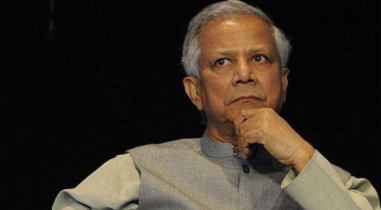
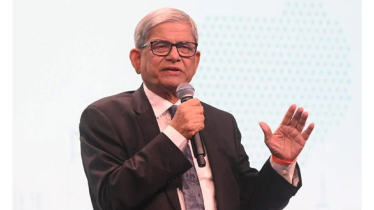
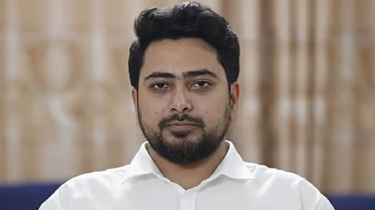
Speculation is growing over who will become Bangladesh’s next president, with political circles closely watching the issue. At the same time, questions are being raised about the constitutional responsibilities and powers of the presidency and how the position functions in practice.
The ruling BNP’s Standing Committee, the party’s highest policy-making body, has reportedly held discussions on selecting the next president. Under Bangladesh’s current parliamentary system, however, the presidency is largely ceremonial. Except for appointing the prime minister and the chief justice, the president generally exercises most constitutional functions on the advice of the prime minister.
What Powers Does the Constitution Give the President?
Bangladesh returned to a parliamentary system in 1991 through the 12th Amendment to the Constitution. Under this system, executive power rests with the prime minister and the Cabinet, while the president serves as the constitutional head of state.
Article 48(3) of the Constitution gives the president independent authority in appointing the prime minister and the chief justice. In most other matters—including summoning, proroguing or dissolving Parliament, giving assent to bills, declaring a state of emergency, appointing ambassadors, declaring war, approving peace treaties and granting pardons—the president is required to act on the advice of the prime minister.
Supreme Court lawyer Advocate Manzil Morshed argues that the president’s direct constitutional powers are very limited. According to him, the wishes of the parliamentary majority effectively determine most of the president’s constitutional actions.
Professor Sabbir Ahmed of the University of Dhaka’s Department of Political Science says the president is supposed to be the country’s highest neutral institution under the law. However, political realities often restrict the ability of a president to act independently of the government in power.
Can the President Become Powerful During a Crisis?
Analysts say that although the president’s powers are limited under normal circumstances, the office can become highly significant during political or constitutional crises. In such situations, presidential decisions can influence the balance of state power.
Bangladesh’s political history contains several examples. In 1996, a confrontation between then-President Abdur Rahman Biswas and Army Chief Lieutenant General Abu Saleh Mohammad Nasim created a situation resembling a military coup.
Similarly, Justice Shahabuddin Ahmed, who served as president from 1996 to 2001, was widely praised for maintaining a neutral position. He also faced disagreements with the government over several issues during his tenure.
In 2002, AQM Badruddoza Chowdhury, who was elected president during the BNP government, resigned after only seven months in office following growing tensions with the party. At the time, discussions about impeaching the president also emerged.
In 2006, amid a political crisis over the formation of a caretaker government, then-President Iajuddin Ahmed took on the role of chief adviser of the caretaker administration himself. He later stepped down from the position following military intervention, while a state of emergency was declared.
There Was a Time When the President Held Almost All Executive Power
The presidency has not always been a largely ceremonial position in Bangladesh. Following independence, the structure of the Mujibnagar government was based on a presidential system. The country shifted to a parliamentary system on January 11, 1972.
However, through the Fourth Amendment to the Constitution on January 24, 1975, Bangladesh returned to a presidential system, with Bangabandhu Sheikh Mujibur Rahman becoming president. Executive authority subsequently remained concentrated in the presidency during the administrations of Ziaur Rahman and Hussain Muhammad Ershad.
Following the fall of Ershad after the mass uprising of 1990, the parliamentary system was restored through the 12th Constitutional Amendment in 1991. Since then, the constitutional powers of the president have been significantly curtailed.
Analysts say that while the constitutional powers of the presidency remain important, how those powers are actually exercised depends largely on the political environment, the balance of power and the personality and independence of the individual holding the office.