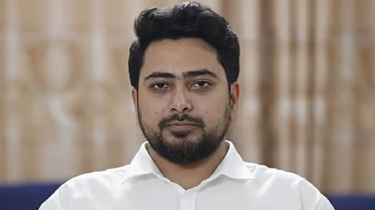

Power, fuel crisis caused by planning failures and delayed procurement decisions: Nahid Islam
Published : 21:24, 13 August 2026
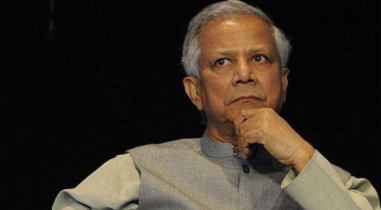
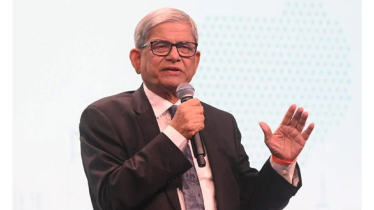
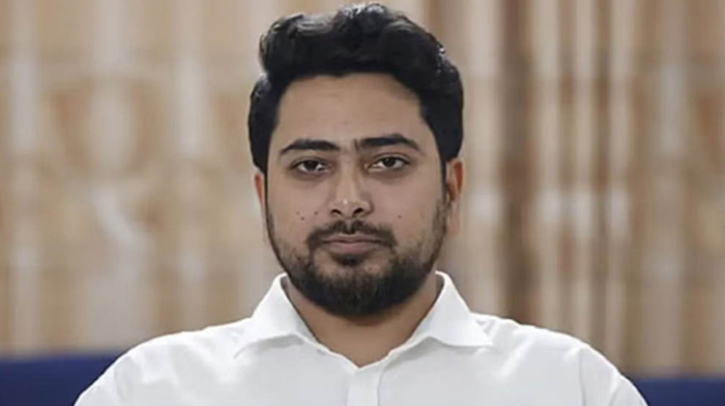
National Citizen Party (NCP) Convener and Opposition Chief Whip Nahid Islam has alleged that the country’s ongoing power and fuel crisis has been caused by inadequate planning and delays in taking timely decisions on fuel procurement.
He also accused the government of using the crisis as an opportunity to hand over parts of the power and energy sector to private business groups.
Nahid made the allegations in a statement sent to the media on Wednesday (August 12) night.
He alleged that although the BNP had pledged to establish a government serving the people, it was now moving towards protecting the interests of oligarchic business groups.
According to Nahid, the BNP’s election manifesto had promised “production, not looting; fairness, not inequality” and a new social and state contract. He claimed, however, that the government had moved in the opposite direction within six months.
He alleged that initiatives were being taken to benefit specific business groups in fuel imports and electricity distribution in the name of privatisation.
Referring to reported plans involving private-sector fuel imports, Nahid questioned why the Bangladesh Petroleum Corporation (BPC) had been given only four days to prepare a draft policy on private-sector import, storage, transportation, distribution and marketing of refined petroleum products.
He further alleged that the BPC chairman was removed after raising objections to the process.
Nahid also criticised the decision to reduce the international tendering period for fuel imports for September-December from 42 days to 10 days. He warned that the shorter timeframe could discourage major international suppliers from participating, reduce competition, increase fuel prices and create opportunities for syndicates.
On the power situation, Nahid claimed that Bangladesh was experiencing its highest-ever level of load-shedding.
According to figures cited by him, peak load-shedding reached 3,757 megawatts at 1am on August 10. The previous peaks were 3,671MW on August 9 and 3,512MW on August 3.
He further claimed that 41 power plants were currently offline and electricity imports from India had fallen by around half. Rural areas, he said, were experiencing power outages lasting between 10 and 14 hours a day.
Nahid rejected the government’s explanation that the crisis was solely linked to the war in the Middle East. He claimed that the power situation had already deteriorated before the conflict began.
He also identified problems at the floating LNG terminal in Maheshkhali as another factor behind the energy crisis. According to Nahid, a fire at an Excelerate Energy FSRU on July 21 disrupted around 510 million cubic feet of gas supply per day, with partial supply resuming on August 5.
He called for an independent technical investigation into the incident and publication of its findings.
Nahid said the energy sector was directly linked to national security and that wrong decisions in the sector ultimately affect farmers, workers, students and small businesses.
He presented a 15-point proposal to address the crisis. Among his proposals are suspending privatisation initiatives pending broader stakeholder consultations, restoring the international tender period for fuel imports to 42 days, approving BPC’s procurement schedule immediately and publishing forward procurement calendars.
He also proposed an independent investigation into the Maheshkhali FSRU incident, a transparent and data-driven system for gas allocation, competitive tendering, a comprehensive audit of capacity payments, reforms in the power sector, wider use of smart meters and greater competition in the LPG and LNG markets.
Nahid also proposed reducing duties on solar panels, converters and batteries, strengthening net-metering and feed-in mechanisms, and setting a target of generating 10,000MW of solar power by 2030.
He alleged that weakening state-owned institutions, allowing a crisis to develop and subsequently handing over sectors to private business groups would not be acceptable.
“The government’s first responsibility is to the people, not to any business group,” Nahid said, adding that the NCP would oppose what he described as policy failures and favouritism towards oligarchic interests in the power and energy sectors.