
Who Is Blocking Bangladesh’s Trillion-Dollar Economic Ambition?
Published : 16:17, 15 August 2026
Bangladesh is at a critical stage of economic reconstruction, where restoring investor confidence, reviving industrial production, creating employment and expanding private-sector investment have become essential. While the government has announced a number of initiatives to accelerate economic recovery, questions remain over how effectively those decisions are being implemented at the field level.
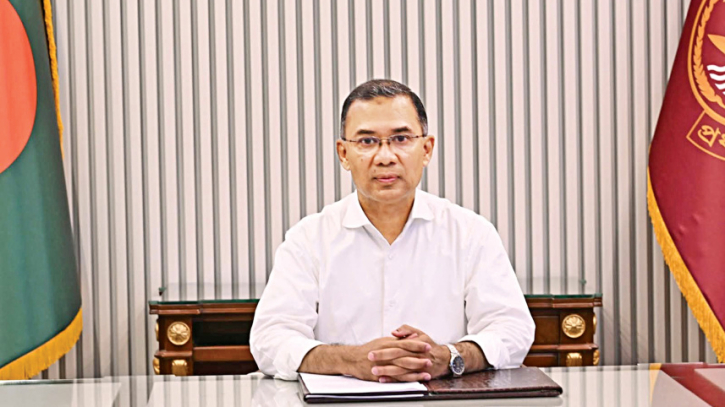
After taking office, Prime Minister Tarique Rahman has placed strong emphasis on building a productive, investment-driven and self-reliant Bangladesh. His vision includes transforming Bangladesh into a trillion-dollar economy by 2034, with investment, industrialisation, employment generation and private-sector development at the centre of the strategy.
After returning home following 17 years abroad, Tarique Rahman spoke about his dream for Bangladesh in his first address to the people, saying, “I have a dream.” His subsequent speeches and initiatives have gradually outlined an economic vision aimed at rebuilding confidence and accelerating growth.
Private sector is the key driver
The private sector remains one of the principal drivers of Bangladesh’s economy. Industry, production, exports, trade and employment depend heavily on private investment.
Therefore, achieving a trillion-dollar economy will require not only government spending but also stronger participation from domestic entrepreneurs and foreign investors. Domestic investment confidence is particularly important because international investors closely examine the business environment before entering a new market.
Political stability, law and order, banking services, energy supply, administrative efficiency and regulatory predictability all influence investment decisions.
Policy decisions versus implementation
The government has announced initiatives aimed at reviving the private sector, but implementation remains a major challenge.
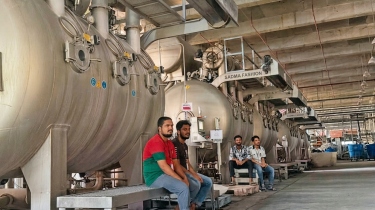
The reopening of closed factories is a key example. Restoring production and employment through the revival of industrial units is an important economic objective. Yet administrative complications, delays and slow decision-making have prevented some enterprises from returning to full production.
This raises a fundamental question: Are government directives being implemented with the same urgency with which they are announced?
Security and investor confidence
No investment climate can remain healthy without security.
Allegations of extortion, land grabbing, mob violence and harassment can discourage entrepreneurs from making new investments. Even when the government sends positive signals, uncertainty at the local level can weaken business confidence.
Similarly, prolonged legal disputes involving entrepreneurs can disrupt normal business operations. Where allegations exist, investigations should follow due legal process, while legitimate business activities should not be unnecessarily paralysed.
Misuse of social media
The alleged use of social media to spread defamatory or misleading campaigns against businesspeople is another concern.
If an entrepreneur is accused of wrongdoing, the matter should be investigated through lawful and evidence-based procedures. But targeted online campaigns, character attacks or alleged attempts to extract money through threats can create fear among investors and damage the broader business environment.
Entrepreneurs should be judged by economic contribution
Bangladesh cannot afford to divide entrepreneurs according to political identity.
The most important measure should be their contribution to investment, production, employment and government revenue. A business-friendly environment must operate on transparent and predictable rules rather than perceptions of political affiliation.
Travel restrictions and frozen bank accounts
Modern businesses are deeply connected to international markets. Entrepreneurs need to travel for imports, exports, foreign investment, international partnerships and market expansion.
Where legal investigations are necessary, they should continue through proper procedures. At the same time, prolonged travel restrictions or frozen bank accounts can seriously disrupt legitimate business operations.
The challenge is therefore to maintain legal accountability without unnecessarily paralysing productive economic activity.
Power and gas supply
Reliable electricity and energy supply are fundamental to industrial growth.
Gas shortages and uncertainty in electricity supply can disrupt production, increase costs and weaken the competitiveness of local industries. When a factory stops production, the consequences extend beyond the owner to workers, suppliers, banks, government revenue and the surrounding economy.
Ensuring reliable energy supply should therefore be treated as a central component of economic recovery.
Bureaucratic barriers
Starting a business, obtaining approvals, securing land and utility connections, and completing tax and VAT procedures can still involve significant delays.
Government directives to improve the ease of doing business will have limited impact unless they are implemented effectively at every administrative level.
A policy becomes meaningful only when it reaches the ground quickly and efficiently. Greater accountability and administrative performance are therefore essential.
Supporting distressed industries
Many businesses are struggling with financial difficulties, production disruptions and debt obligations. Some industrial enterprises are at risk of closure.
Where viable, such businesses should be given opportunities for restructuring and recovery. Protecting productive enterprises can also protect thousands of jobs and preserve banking, supply-chain and government revenue interests.
Reforming tax and VAT administration
A competitive business environment requires a tax and VAT system that is simple, transparent and predictable.
Revenue collection is essential for the state, but tax administration should not become an unnecessary barrier to investment and entrepreneurship. Reducing procedural complexity and ensuring accountability can help improve both compliance and business confidence.
Government and business must work together
The government and the private sector cannot be treated as opposing forces in Bangladesh’s economic recovery.
The government’s role is to establish sound policies, infrastructure, security and a predictable regulatory environment. Entrepreneurs, in turn, invest capital, create production capacity and generate employment.
The experience of successful market economies demonstrates that governments do not need to run businesses; they need to create conditions in which businesses can grow.
Implementation is now the real test
Prime Minister Tarique Rahman’s trillion-dollar economic ambition cannot be achieved through policy announcements alone.
Bangladesh needs efficient administration, faster implementation, improved law and order, reliable energy, simplified taxation and a stable investment environment.
If bureaucratic delays, institutional inaction or conflicting actions within the government are obstructing economic initiatives, those obstacles must be identified and addressed.
A closed factory is not merely a closed business. It represents lost jobs, unpaid loans, disrupted supply chains, reduced government revenue and weakened local economic activity. Likewise, when an entrepreneur loses confidence, the country may lose potential investment for years to come.
The biggest challenge facing Bangladesh, therefore, is not simply a shortage of capital. It is a crisis of confidence, a crisis of implementation and a gap between policy decisions and ground-level execution.
If Bangladesh is to achieve its trillion-dollar economic ambition, the government must ensure that its policies move swiftly from the cabinet table to the real economy.
The central question remains: When the Prime Minister is taking initiatives to revive the economy, who is standing in the way of implementing those initiatives?
Identifying those obstacles and placing capable, accountable and committed people in charge of implementation may ultimately determine whether Bangladesh’s economic vision becomes a reality.