
India at 80: A Milestone That Matters to Bangladesh and South Asia
Published : 23:21, 15 August 2026
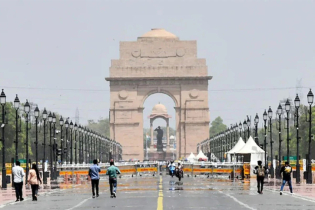
India is celebrating its 80th Independence Day on August 15, marking nearly eight decades since the end of British colonial rule in 1947. Over the years, India has transformed from a poverty-stricken newly independent state into one of the world’s largest economies and a major technological, strategic and geopolitical power.
Because of its geographical proximity, shared history, cultural ties, rivers, trade relations and the blood-soaked connection forged during Bangladesh’s Liberation War in 1971, India’s long journey remains highly significant for Bangladesh.
As South Asia’s largest country, India’s domestic politics, economic progress, foreign policy and strategic decisions have a direct and far-reaching impact on the region.
Democratic Continuity and National Unity
When India gained independence in 1947, poverty, hunger, illiteracy and weak infrastructure were among its biggest challenges. Given the country’s enormous diversity of languages, religions, ethnicities and cultures, there were also doubts about whether India could sustain a democratic political system.
Yet one of India’s most significant achievements over the past eight decades has been the continuation of its constitutional and electoral framework.
Regular elections, political competition and peaceful transfers of power have remained important features of India’s political system. In a region that has experienced military interventions, political instability and disruptions to democratic institutions, India’s democratic continuity represents an important regional experience.
At the same time, communal tensions, political polarisation, social divisions and debates over civil liberties remain part of India’s contemporary political challenges.
Economic and Technological Transformation
India has undergone a remarkable economic transformation since independence.
Once struggling with severe food shortages, the country has developed major capabilities in agriculture, manufacturing, information technology, pharmaceuticals, infrastructure and digital services.
India’s space programme is one of the most visible examples of its technological advancement. Missions to the Moon and Mars have demonstrated the country’s ability to achieve complex scientific objectives while operating within relatively limited budgets.
India has also emerged as a major global supplier of medicines and vaccines. Its experience with digital identity, digital payments and technology-driven public services has brought millions of people into the formal economy.
For Bangladesh and other developing countries, India’s experience in digital transformation offers valuable lessons.
Opportunities and Unresolved Challenges for Bangladesh
India’s economic and infrastructural development has the potential to strengthen the entire South Asian region.
Greater connectivity through roads, railways, waterways and maritime routes could expand regional trade and create new economic opportunities for Bangladesh and neighbouring countries.
Bangladesh and India have expanded cooperation in areas including trade, energy, connectivity and security. However, several important issues remain unresolved.
The sharing of common rivers, border killings, trade imbalance and recent political sensitivities—particularly the presence of former Prime Minister Sheikh Hasina in India—have created new challenges in bilateral relations.
A mature relationship requires not only cooperation but also the ability to address disagreements with sensitivity and mutual respect.
Resolving outstanding issues through dialogue, transparency and constructive diplomacy will therefore be essential for building a more stable and balanced relationship.
Similar Aspirations Among Young People
India and Bangladesh both have large young populations. For today’s younger generation, independence means more than freedom from colonial rule. It also means access to quality education, employment, social security, economic opportunity and a better standard of living.
Job creation, skills development, women’s empowerment, quality education and technological transformation remain common challenges for both countries.
India’s huge domestic market, technological capabilities and expanding infrastructure could generate greater regional opportunities if combined with stronger economic cooperation across South Asia.
Mutual Respect Should Define Bilateral Relations
India remains a crucial neighbour for Bangladesh. At the same time, Bangladesh’s geographical position, economic potential and strategic importance make it an important partner for India.
Future relations should therefore move beyond government-to-government engagement and expand cooperation among businesses, educational institutions, cultural organisations and ordinary citizens.
The relationship should be built on mutual respect, sovereign equality, transparency, fairness and sensitivity to each other’s national interests.
Bangladesh can welcome India’s achievements over the past 80 years while maintaining its own independent foreign policy and national interests.
As India’s economic and strategic influence grows, so does its responsibility toward the wider region.
The Road Ahead
The coming years will show how effectively India can use its economic, technological and strategic strength to build an inclusive society and contribute to a peaceful and prosperous South Asia.
For Bangladesh and India, the future will require both broader cooperation and a pragmatic approach to disagreements.
India’s 80-year journey is therefore more than the history of one country’s independence. It is also part of the broader political, economic and strategic transformation of South Asia.
If India can continue to harness its diversity, democratic institutions, economic strength and technological capabilities for inclusive development, the benefits could extend far beyond its own borders.
For Bangladesh and the wider region, a strong, stable and prosperous India can become an important pillar of a more connected, peaceful and economically vibrant South Asia.