
Foreign Asset Allegations and Family Networks Raise Questions Over Bangladesh’s Power Sector
Published : 02:01, 11 September 2026
Severe load shedding across Bangladesh has caused widespread public hardship, raising fresh questions about the country’s power-generation and energy management system. While the government faces pressure over the current situation, many of the sector’s underlying challenges are linked to policy decisions, infrastructure limitations and financial pressures that developed over previous years.
On paper, Bangladesh has an installed power-generation capacity of around 29,000 megawatts, while peak demand is estimated at around 18,500 megawatts. Despite this apparent capacity surplus, actual generation has at times fallen to between 12,000 and 14,000 megawatts, creating a significant gap between available capacity and electricity supplied to the national grid.
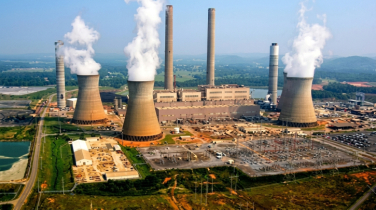
A large portion of Bangladesh’s power plants are gas-fired, making reliable gas supplies crucial for maintaining generation. However, limitations in domestic gas supply have prevented several plants from operating at full capacity.
The country’s growing dependence on imported LNG has also increased exposure to international fuel prices, foreign-exchange pressures, and import costs. Coal- and oil-fired plants have faced their own challenges related to fuel procurement and payment obligations.
Delays in settling outstanding payments to private power producers can also affect their ability to procure fuel and maintain regular generation, potentially adding further pressure to electricity supply.
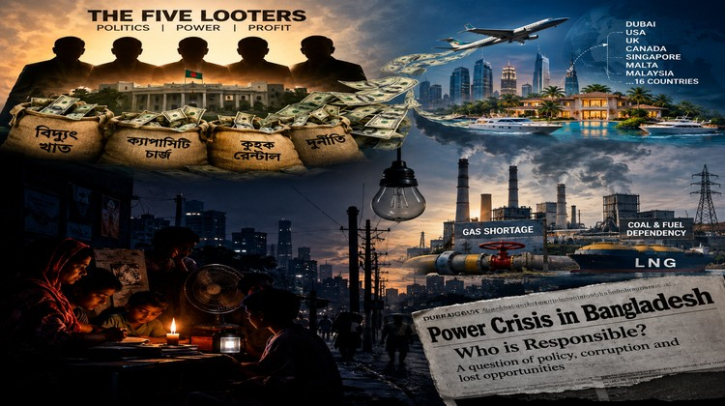
Successive governments have adopted various measures to increase power generation rapidly, including quick-rental power plants. While such initiatives helped address short-term electricity shortages, questions have subsequently emerged over their long-term financial implications.
Capacity payments have been another area of debate. Under such arrangements, payments may be made for keeping generation capacity available even when a plant is not producing electricity. Experts have argued that excessive or poorly planned capacity can place additional financial pressure on the power sector.
The experience has highlighted the need to better match new generation capacity with realistic demand forecasts and the operational performance of existing plants.
Over the past decade and a half, several allegations have emerged concerning transparency, procurement procedures, project costs and potential conflicts of interest in Bangladesh’s power and energy sector.
Former State Minister for Power and Energy Nasrul Hamid has faced allegations concerning various energy and infrastructure projects, including claims involving business interests linked to members of his family and associates. There have also been allegations regarding prepaid metering, IT infrastructure and renewable-energy projects.
However, allegations should not be treated as established facts unless they are supported by verified documents, independent investigations or final judicial findings. A transparent review of relevant contracts, ownership structures and financial transactions would be necessary to establish the facts.
Claims concerning overseas assets allegedly linked to Nasrul Hamid and members of his family have also attracted attention. Various reports have raised questions about properties and business interests in countries including the United States, United Kingdom, United Arab Emirates, Canada, Singapore, Malta and Malaysia.
Determining whether such assets were acquired lawfully or whether any funds were illegally transferred abroad would require verification through financial records, ownership documents, banking information and investigations by the relevant authorities in Bangladesh and other jurisdictions.
The current electricity crisis goes beyond the issue of generation capacity. Fuel availability, financial management, plant efficiency, transmission and distribution infrastructure, import dependence and past policy decisions are all interconnected with the sector’s performance.
Experts have repeatedly emphasized the importance of increasing domestic gas exploration and production, improving the efficiency of existing power plants and expanding renewable-energy capacity. Strengthening transmission and distribution networks is also essential to ensure that available electricity can reach consumers efficiently.
At the same time, an independent review of major power-sector projects, including procurement processes, contractual obligations, capacity payments and financial arrangements, could help identify structural weaknesses and improve accountability.
For Bangladesh to overcome the present electricity crisis, a long-term strategy based on realistic demand forecasting, energy security, financial discipline, greater transparency, and stronger institutional accountability will be essential.