
Labour Leaders Back Private Fuel Imports Under ‘Bangladesh First’ Policy
Published : 19:28, 16 August 2026
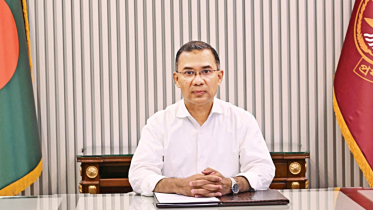
Labour leaders in Bangladesh’s fuel sector have expressed full confidence in any decision Prime Minister Tarique Rahman may take regarding the private import of refined petroleum products, saying the national interest, public welfare and workers’ rights should remain the top priorities.
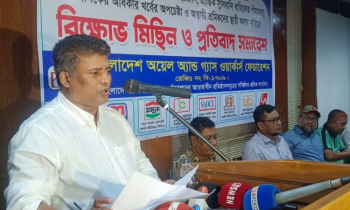
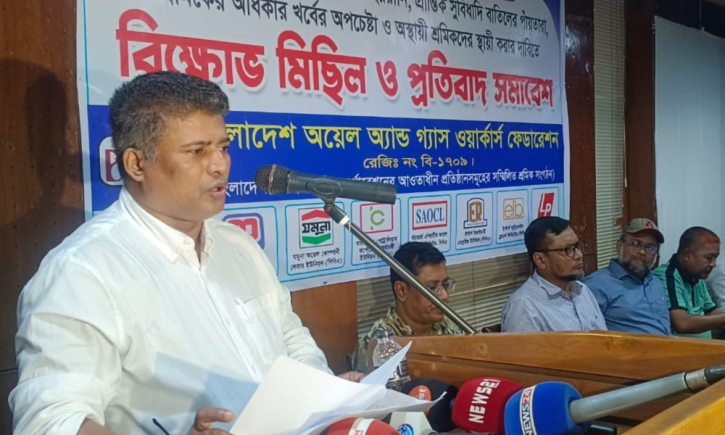
Muhammad Yakub, secretary-general of the Bangladesh Oil and Workers Federation and general secretary of the Jamuna Oil Company Limited (JOCL) Labour Union, said workers would have no objection to private-sector fuel imports if the decision is made in the broader interest of the country and its people.
He made the remarks at a protest rally and procession held in front of the ‘Jamuna Bhaban’, the headquarters of JOCL in Agrabad, Chattogram, on Monday at noon. Workers and employees from JOCL and other organisations in the energy sector took part in the programme.
Yakub said Bangladesh is already importing crude oil through the private sector, while discussions are now underway regarding the private import of refined petroleum products.
He said any decision in this regard should take into account the rights and interests of workers as well as the broader interests of the national economy and consumers.
“The honourable Prime Minister has said, ‘Bangladesh first.’ We also believe in Bangladesh first. We hope that the Prime Minister will make a decision on private fuel imports by giving the highest priority to the national interest and public welfare. We have full confidence in his decision and have no objection to private imports on this issue,” Yakub said.
The labour leader, however, expressed concern over the rights and benefits of employees in the energy sector.
He alleged that a section within the government was attempting to undermine workers’ rights and create instability in the strategically important sector.
According to Ayakub, attempts are being made through various forms of intervention to reduce 22 existing benefits enjoyed by workers.
He also alleged that efforts to update workers’ benefits through bilateral agreements were being delayed, while there were attempts to make labour regulations in the energy sector less worker-friendly.
Yakub said that although the government was talking about ensuring fair benefits for workers, a different situation was emerging in the energy sector.
He claimed that efforts were underway to reduce existing benefits rather than improve them at various companies under the Bangladesh Petroleum Corporation (BPC), including Padma Oil, Meghna Petroleum, Jamuna Oil, SAOCL and LPGL.
Labour leaders said salaries, allowances and other benefits of workers at BPC’s oil marketing companies are normally updated through bilateral agreements every two years.
However, nearly 19 months have passed since the expiry of the previous agreement, but a new agreement has yet to be concluded, which they attributed to alleged negligence and delays by the concerned companies.
They also alleged that the Energy and Mineral Resources Division initiated the drafting of a ‘Marginal Benefits Policy-2026’ for companies under BPC on June 17.
According to the labour leaders, the proposed policy could lead to cuts in the 22 existing benefits enjoyed by employees.
The workers’ representatives also alleged that there are moves to repeal Sections 209, 210 and 211 of the Bangladesh Labour Act, 2006, concerning industrial disputes and their resolution.
They said repealing the provisions could limit the effective role of Collective Bargaining Agent (CBA) leaders in representing workers and protecting their rights.
Meanwhile, an office order issued by the Mineral Resources Division on July 26 formed an eight-member committee headed by BPC’s Director of Operations.
According to labour leaders, the committee has been tasked with monitoring the activities of various labour organisations at oil marketing companies and making recommendations to ensure accountability. The move has reportedly created concern among workers.
Labour leaders also raised concerns about workers who have been employed for years under company-linked contractors on a low-wage ‘no work, no pay’ basis.
They alleged that these experienced workers are not being given priority when new employees are recruited.
Ayakub said workers are seeking neither additional privileges nor special treatment. Their demand, he said, is simply to protect their legitimate rights and existing benefits.
“We want to make it clear that no one will be allowed to create instability in the energy sector. Workers and employees are not demanding any extra benefits; they only want their legitimate rights and entitled benefits,” he said.
The rally was chaired by Abu Hossain, president of the Jamuna Oil Company Labour Union.
Among those present were Jasim Uddin, president of the Padma Oil Workers and Employees Union; Monir Hossain, president of the LPG Workers and Employees Union; Kamrul Islam, joint general secretary of the BPC Workers and Employees Union; Selim Kabir Chowdhury, office secretary of the Padma Oil Workers and Employees Union; and Syed Mohammad Mannan, joint general secretary of the Jamuna Oil Labour Union, among others.
The Bangladesh Oil and Workers Federation is the umbrella organisation representing workers and employees in Bangladesh’s oil and gas sector. The federation comprises CBA organisations from Bangladesh Petroleum Corporation, Padma Oil Company, Meghna Petroleum Corporation, Jamuna Oil Company, Eastern Refinery, Standard Asiatic Oil Company and LP Gas Limited.