
18 Months of Yunus Government: Legal Review Needed on Constitutional and Administrative Decisions

Published : 20:29, 17 August 2026
Dhaka, August 17, 2026: Several legal and constitutional questions have emerged from the 18-month tenure of the interim government led by Dr. Muhammad Yunus, particularly concerning constitutional reforms, administrative decisions, fundamental rights, the exercise of state authority and various policy measures.
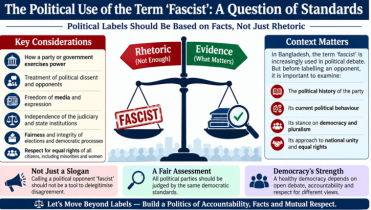
Legal and constitutional issues surrounding these decisions should be assessed through the relevant laws, official records, decision-making processes and available evidence rather than through political positions or assumptions.
Constitutional Amendment Process
Article 7 of the Constitution of Bangladesh establishes the Constitution as the supreme law of the Republic and states that all powers of the Republic belong to the people and must be exercised under the authority of the Constitution.
Article 142 provides a specific procedure for amending the Constitution. Any addition, alteration, substitution or repeal of constitutional provisions must follow the prescribed constitutional process.
During the Yunus-led interim administration, several initiatives concerning constitutional reform were undertaken, including the “July National Charter (Constitutional Reform) Implementation Order, 2025.”
The key legal question is whether particular reforms could be introduced through executive orders or ordinances, or whether they required the parliamentary constitutional amendment process. This can only be determined through a detailed examination of the relevant orders, constitutional provisions and judicial precedents.
Referendum and Constitutional Framework
The government also moved forward with initiatives concerning a referendum as part of the broader reform process.
Questions regarding the constitutional basis of a referendum, the scope of its authority and whether constitutional changes can be introduced through such a process require careful legal examination.
Fundamental Rights
Articles 26 to 47 of the Constitution guarantee a range of fundamental rights, including equality before law, protection of life and personal liberty, safeguards relating to arrest and detention, freedom of movement, peaceful assembly, freedom of thought and expression, freedom of profession and religious freedom.
Any administrative action involving detention, legal proceedings, restrictions on assets, bank accounts or movement should therefore be assessed to determine whether the relevant laws and due processes were properly followed.
Similarly, any administrative measures involving journalists, teachers, businesspeople, public officials or other professionals should be examined on the basis of their legal authority and necessity.
International Agreements and State Decisions
Article 145A of the Constitution contains provisions concerning treaties and agreements with foreign states, including their submission to the President and presentation to Parliament through the President. Special provisions apply to agreements relating to national security.
During the Yunus administration, Bangladesh engaged in discussions and agreements involving economic, trade, defence and other forms of cooperation with several countries.
The question of which agreements qualify as constitutional “treaties” and whether the relevant constitutional procedures were followed can be determined through examination of official documents.
Exercise of Public Authority and Conflict of Interest
Where institutions or individuals connected to a public office holder receive government approvals, licences, tax benefits or other administrative facilities, the transparency and legality of the decision-making process become important issues for review.
Relevant documents, decision-making authorities, applicable laws and the direct or indirect role of concerned individuals should be examined before drawing conclusions.
The mere granting of a government facility does not, by itself, establish wrongdoing or criminal liability.
The Penal Code, 1860 and the Prevention of Corruption Act, 1947 contain provisions concerning abuse of public authority, unlawful conduct by public officials and acquisition of improper benefits. Whether these provisions apply to a particular case depends on the facts and evidence.
Independence of the Judiciary
When cases involving government officials or other individuals are disposed of by courts, such decisions should not automatically be attributed to executive influence.
Court orders, case records, legal procedures and the basis of judicial decisions must be examined before reaching any conclusion regarding possible interference.
The independence of the judiciary remains a fundamental principle of the rule of law. Any allegation of interference with judicial proceedings should therefore be assessed through evidence and official records.
Public Health and Administrative Responsibility
Public health and the delivery of essential services are important responsibilities of any government. If questions arise regarding vaccination programmes, healthcare delivery or public health administration, the underlying causes should be assessed through government records, health data, field reports and the roles of relevant officials.
Section 304A of the Penal Code provides for punishment in cases where death results from a rash or negligent act. However, whether a particular policy or administrative decision had a direct causal connection with a death, and whether individual criminal liability arises, must be determined on the basis of evidence.
Need for Independent Assessment
The legal and constitutional questions surrounding the 18-month tenure of the Yunus administration should be examined through law, evidence and official records rather than political assumptions.
If necessary, an independent review or investigation mechanism could examine government documents, decision-making procedures and relevant records, while hearing the views of concerned individuals and experts.
Where allegations are established through evidence, action may be taken under applicable laws. Conversely, where sufficient evidence is not found, that should also be clearly communicated.
In a democratic state governed by the rule of law, it is essential that government decisions comply with the Constitution and applicable laws. At the same time, no individual or institution should be held responsible solely on the basis of allegations without due process and evidence.
Therefore, the most appropriate approach to assessing the constitutional and administrative record of the Yunus government is independent review, evidence-based examination of official records and impartial judicial process.