
Saving the Housing Sector Is Vital for Other Industries: Industry Experts
Published : 15:47, 9 October 2026
Food, clothing, and shelter are among the basic necessities of human life, with housing playing a particularly important role. Owning a home within one's financial means is a dream for many people, although achieving it remains difficult for a significant number of households. Real estate companies have helped make housing accessible to many, but the sector is increasingly facing challenges. Industry experts and business leaders believe that reducing these risks is essential to sustaining economic activity in Bangladesh.
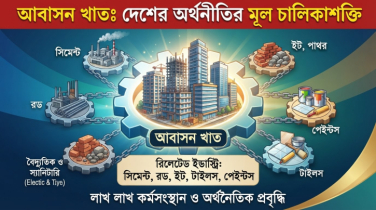
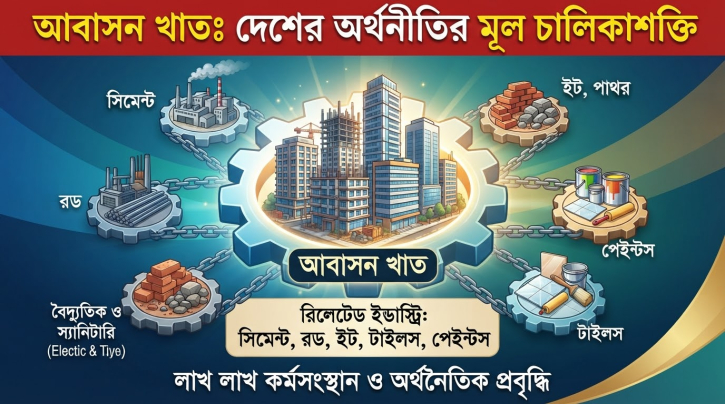
According to stakeholders, the real estate and housing sector is far more than a business involving the construction of flats, apartments and buildings. It is closely connected to hundreds of supporting industries, employment opportunities and broader economic activities. A slowdown in housing can therefore affect construction materials, electrical equipment, sanitary products, interior finishing and many other related businesses.
Under the principle that “saving the housing sector means saving other industries,” stakeholders stress the need to maintain stability in real estate to support domestic demand and keep production-oriented industries moving.
More Than 250 Supporting Industries Linked to Housing
Industry stakeholders estimate that more than 250 supporting and subsidiary industries are directly or indirectly connected to the housing sector. These include businesses involved in the production and supply of steel rods, cement, bricks, stone, sand, ceramics and tiles.
The sector also supports paint manufacturers, glass and aluminium businesses, electrical wire and switch suppliers, lighting companies, pipe manufacturers and sanitary fittings businesses.
Experts say that when the housing market slows, or flat and apartment sales decline, demand for products supplied by these industries may also fall. This can lead to lower factory output, reduced business activity and slower growth across the wider industrial sector.
A Significant Source of Employment and Economic Activity
The construction and housing sector provides employment to a large number of people in Bangladesh. Engineers, architects, project managers, bricklayers, rod workers, electricians and general construction workers all depend directly or indirectly on activities in this sector.
Industry stakeholders warn that a prolonged slowdown could affect employment, workers' incomes and businesses across the supply chain, with potential consequences for the broader economy. Keeping investment and commercial activities in the housing sector active is therefore important for maintaining economic stability.
Four Proposals to Address the Challenges
Business leaders and experts have outlined several measures they believe could help the sector recover and achieve sustainable growth.
Policy support: They have called for stable, long-term and business-friendly policies that give investors greater certainty and allow them to plan and operate their businesses more confidently.
Affordable home financing: Easier loan conditions and comparatively lower interest rates for both homebuyers and developers have been proposed. Improved access to financing could reduce financial pressure on buyers and support the implementation of new housing projects.
Public-private partnerships: Stakeholders have urged the government to strengthen joint initiatives between public and private organisations through public-private partnerships (PPPs), helping encourage investment and expand housing opportunities.
Controlling construction material prices: Effective market monitoring is needed to address rising prices of essential construction materials, including steel rods and cement. According to industry stakeholders, keeping construction costs manageable could support project implementation and improve the affordability of flats for buyers.
Calls for Timely Measures to Support the Housing Sector
Business leaders and experts expect the government and policymakers to recognise the sector's broader economic importance and introduce timely, business-friendly measures.
They argue that the benefits of a strong housing sector extend beyond the construction of new flats and buildings. Its performance affects construction material production, supply chains, employment, and the future of numerous small and large businesses.
Ensuring stability in the housing sector could therefore help sustain activity across related industries and create opportunities to strengthen and accelerate Bangladesh's overall economic growth.
Subject-