
More Than 500 Rohingya Feared Dead After Boats Vanish in Bay of Bengal
Published : 22:32, 17 July 2026
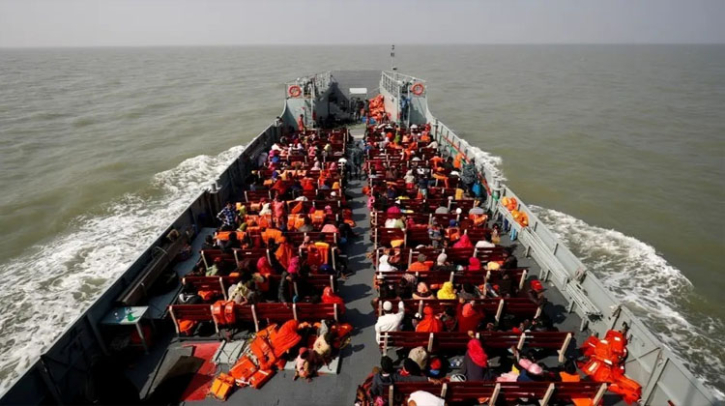
More than 500 people, most of them Rohingya refugees, are feared dead or missing after two overcrowded boats reportedly capsized off the coast of Myanmar, raising fresh concerns about the increasingly deadly sea routes used by people fleeing persecution and hardship.
The two vessels departed from Myanmar’s conflict-affected Rakhine State in late June, carrying approximately 250 and 280 passengers. Some of those on board were reportedly Rohingya refugees who had previously been living in camps in Bangladesh.
The first boat lost contact shortly after beginning its journey and has not been located. The second vessel is believed to have sunk near Myanmar’s Ayeyarwady coast on July 8. The boats were reportedly travelling towards Malaysia, a common destination for Rohingya seeking employment, security and a better future.
Authorities and humanitarian agencies have struggled to confirm the exact number of deaths because the journeys were organised secretly by smugglers and took place in remote waters. No comprehensive passenger records were available, while limited access to Myanmar’s coastline has further complicated search and rescue efforts.
The voyages occurred during the monsoon season, when the Bay of Bengal and Andaman Sea are frequently affected by heavy rainfall, strong winds and dangerous waves. Refugees often travel in poorly maintained wooden boats without adequate food, drinking water, navigation equipment or life jackets.
Many Rohingya undertake these dangerous journeys because they have few legal routes to safety. In Myanmar, the Muslim minority continues to face restrictions on citizenship, movement, education and access to healthcare. Renewed fighting in Rakhine State has also displaced communities and made daily life increasingly dangerous.
Conditions in Bangladesh’s overcrowded refugee camps have also deteriorated. Reduced humanitarian funding, food shortages, limited employment opportunities, insecurity and uncertainty over repatriation have pushed some refugees to place their lives in the hands of trafficking and smuggling networks.
Women and children are frequently among those attempting the journey. Passengers may spend weeks at sea, facing starvation, dehydration, illness, violence and exploitation. Some boats are abandoned by traffickers, while others are refused permission to land by countries in the region.
Nearly 900 Rohingya were reported dead or missing at sea in 2025, making it the deadliest year recorded for crossings through the Bay of Bengal and Andaman Sea. Hundreds more have already died or disappeared during similar journeys in 2026.
Humanitarian organisations have called on regional governments to strengthen search and rescue operations, allow boats in distress to land safely and take action against trafficking networks. They have also urged the international community to provide greater support for Rohingya refugees and create safe and legal pathways for relocation.
The disappearance of more than 500 people highlights the continuing desperation of the Rohingya, who remain trapped between persecution in Myanmar, worsening conditions in refugee camps and some of the world’s most dangerous migration routes.