
Tk 57,301 Crore Proposed for Secondary and Higher Education in FY 2026-27
Published : 20:37, 12 June 2026
The government has proposed an allocation of Tk 57,301.68 crore for the Secondary and Higher Education Division under the Ministry of Education in the fiscal year 2026-27, aiming to transform Bangladesh into a skills-based economy and create greater employment opportunities.
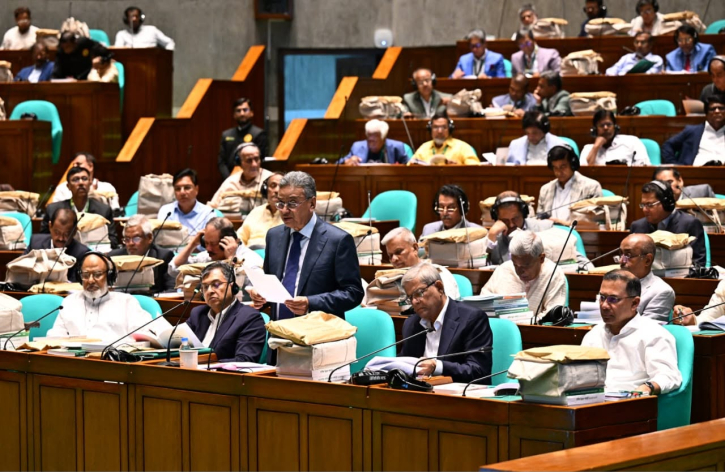
Presenting the national budget in Parliament on Thursday, Finance and Planning Minister Amir Khasru Mahmud Chowdhury proposed a record Tk 136,606 crore allocation for the education sector, making it the second-highest priority sector in the national budget.
Of the proposed allocation for secondary and higher education, Tk 32,867.24 crore has been earmarked for operational expenditures, while Tk 24,434.44 crore will be spent on development activities.
To strengthen students’ competitiveness in the global arena and expand technology-based learning, the government has announced several initiatives. These include the establishment of 25,000 new multimedia classrooms at the secondary level, setting up blended learning laboratories in 100 schools, and appointing laboratory supervisors.
The budget also outlines plans to introduce a comprehensive curriculum for mandatory third-language education alongside Bangla and English. Five language training modules and resource pools will be developed, while 500 modern language laboratories will be established across the country.
In terms of infrastructure development, the government plans to construct 4,000 new academic buildings and establish 500 new educational institutions in underserved areas. To improve sanitation and student welfare, 1,485 toilets and 1,000 vending machines will be installed in educational institutions nationwide.
Additionally, ongoing development projects will see the handover of 218 academic buildings, 21 administrative buildings, 38 multipurpose buildings, and 60 residential halls at the secondary and higher secondary levels to the relevant authorities.
The government expects these investments to modernize the education system, improve learning outcomes, and prepare a skilled workforce capable of meeting future economic and technological challenges.
Subject-