
Rare in Global Politics: Families with Three National Leaders — Contextual Discussion Around the
Published : 19:15, 16 February 2026
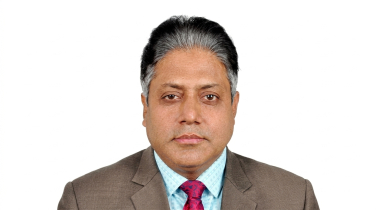
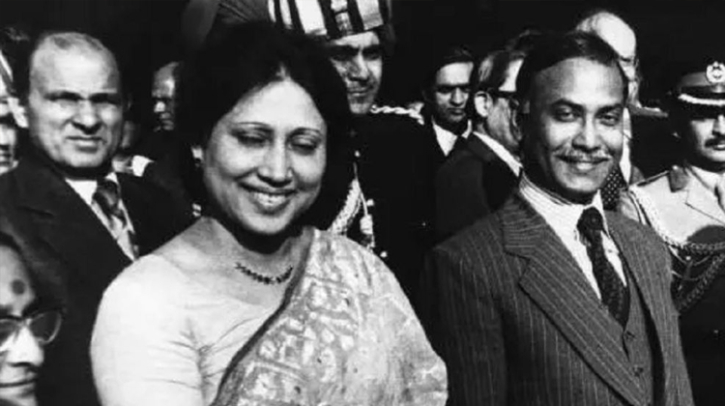
Dhaka: Discussions have recently resurfaced regarding the rare phenomenon of having three national leaders from the same family. In Bangladesh, the political legacy of Ziaur Rahman, Khaleda Zia, and Tarique Rahman is often cited in this context.
However, verified historical records confirm that while two members of the family have served as head of state or head of government, the third has not held either office to date.
Ziaur Rahman served as the President of Bangladesh from 1977 until his assassination in 1981. His wife, Khaleda Zia, later became Prime Minister and served two terms in office from 1991 to 1996 and again from 2001 to 2006. Tarique Rahman currently serves as the Acting Chairman of the Bangladesh Nationalist Party (BNP), but he has not served as President or Prime Minister.
Globally, examples of three members from the same family serving as national leaders are rare but do exist. One of the most prominent examples is India’s Nehru–Gandhi family. Jawaharlal Nehru, Indira Gandhi, and Rajiv Gandhi each served as Prime Minister of India across different periods.
Another example is North Korea’s Kim family, where leadership has passed through three generations. Kim Il-sung led the country as its founding leader, followed by his son Kim Jong-il and later his grandson Kim Jong-un, who currently holds power.
In South Asia, political family legacies are also evident in Pakistan’s Bhutto family. Zulfikar Ali Bhutto and his daughter Benazir Bhutto both served as Prime Minister, though the family did not produce three national leaders.
Political analysts note that while family-based leadership traditions appear in several countries, democratic systems ultimately determine leadership through electoral processes and constitutional frameworks. In Bangladesh’s case, the Zia family has played a significant role in national politics, but historically, only two members have held the country’s top executive offices.
BD/AN