
Health Parliament Bangladesh Launched to Strengthen Citizen Participation in Healthcare Policymaking
Published : 11:43, 28 June 2026
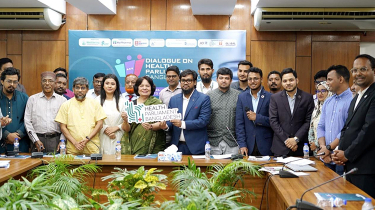
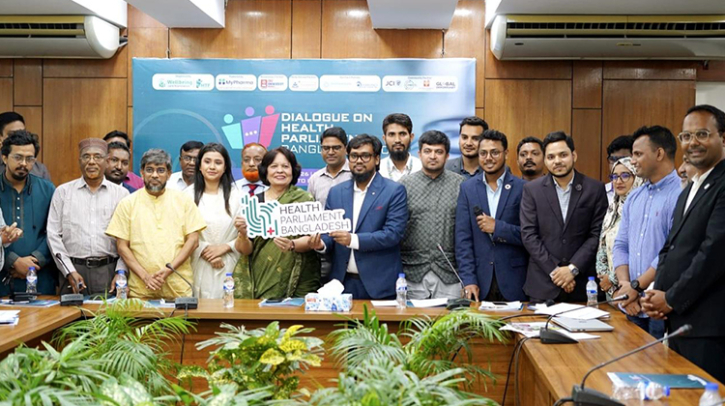
In a significant step toward promoting citizen participation, evidence-based policymaking, and greater accountability in Bangladesh's healthcare sector, the Well-being Care Foundation organized a high-level roundtable discussion titled "Dialogue on Health Parliament Bangladesh 2026" on Saturday (June 27) at the Bishwa Shahitto Kendro in Banglamotor, Dhaka.
The event brought together policymakers, public health experts, physicians, researchers, academics, development partners, youth leaders, and representatives from more than 20 health-focused organizations to discuss the future of citizen engagement in healthcare governance.
The session was chaired by Md. Rajikul Hasan, Founder and Chairman of the Well-being Care Foundation, while Dr. Mahbubur Rahman Rajib, a Governing Body Member of the foundation, moderated the discussion.
The roundtable featured distinguished speakers, including Dr. Halida Hanum Akhter, Senior Faculty at the Johns Hopkins Bloomberg School of Public Health; Dr. Syed Abdul Hamid, Professor at the Institute of Health Economics, University of Dhaka; Professor Shafiun Nahin Shimul, Director of the Institute of Health Economics; Md. Asif Iqbal, Assistant Director of the School Health Program under the Directorate General of Health Services (DGHS); Dr. Mohammad Zakaria Rana, Assistant Director (Planning and Research), DGHS; S. M. Shaikat, Executive Director of SERAC-Bangladesh; Md. Adnan Hossain, Founder and Executive Director of It's Humanity Foundation; Dr. Mohammad Masumul Haque, Founder of the Cancer Awareness Foundation of Bangladesh; and Dr. A.N.M. Ehtesham Kabir, National Consultant for Adolescent Health and Mental Health at UNICEF Bangladesh.
During the event, Mahmudul Hasan, a Governing Body Member of the Well-being Care Foundation, presented the concept, proposed structure, and future roadmap of Health Parliament Bangladesh. He explained that the initiative aims to establish a citizen-driven national platform that integrates grassroots health concerns, public opinions, and research findings into the country's healthcare policymaking process.
According to the proposed framework, 300 Health Parliament Members will represent Bangladesh's 300 parliamentary constituencies. These members will identify local healthcare challenges, gather citizens' feedback, assess service gaps, and prepare evidence-based policy recommendations for submission to relevant government authorities and policymakers. Organizers believe that this mechanism will strengthen public participation and improve the effectiveness of national health policies.
Speakers emphasized that sustainable improvements in Bangladesh's healthcare system require the combined efforts of the government, private sector, development partners, academic institutions, researchers, healthcare professionals, civil society organizations, and young people. They stressed that evidence collected from local communities can significantly contribute to informed policymaking and better healthcare delivery.
Professor Dr. Syed Abdul Hamid stated that Health Parliament Bangladesh is not intended to replace the government but rather to complement its efforts in implementing health policies. He noted that Members of Parliament often have broad responsibilities, making it difficult to monitor every local health issue. A structured citizen platform, he said, can help bridge that gap by bringing grassroots concerns and evidence-based recommendations to policymakers.
He further highlighted the importance of long-term funding and collaboration among government institutions, development agencies, universities, NGOs, and civil society organizations, adding that such collective support would be essential for sustaining the initiative.
Speaking at the discussion, Dr. Halida Hanum Akhter said Bangladesh does not suffer from a shortage of knowledge, expertise, or public health research. Rather, the primary challenge lies in translating research findings into practical policy and implementation. She expressed hope that Health Parliament Bangladesh would serve as an effective bridge between research, policymakers, healthcare providers, and citizens.
Participants also observed that the initiative could contribute significantly to achieving Universal Health Coverage (UHC) and Sustainable Development Goal 3 (SDG-3) by promoting inclusive governance, evidence-based decision-making, and public accountability.
The speakers proposed that the platform regularly organize policy dialogues, health budget analyses, research initiatives, advocacy campaigns, public awareness programs, and youth engagement activities. They also emphasized prioritizing maternal and child health, mental health, non-communicable diseases, primary healthcare, preventive healthcare, and health equity.
The discussion concluded with a call for stronger collaboration among government agencies, development partners, educational institutions, research organizations, healthcare providers, and civil society. Participants expressed confidence that, through sustained research, stakeholder engagement, and citizen participation, Health Parliament Bangladesh could emerge as a strong national platform for advancing healthcare policy and governance in the country.
The event concluded with the official inauguration of Health Parliament Bangladesh and the unveiling of its official logo. Participants pledged to work collectively toward establishing it as Bangladesh's first inclusive, research-driven, citizen-led national health dialogue platform.
The program was co-organized by Help the Future, while UK-based pharmaceutical startup My Pharma Limited served as the Powered by Partner. Supporting partners included EduDrive, Ayushkandi Eye Hospital, and Biswanath Eye Hospital. Community partners included JCI Dhaka Diplomats, Digital Media Forum (DMF), and Youth Connect.
Among those in attendance was Md. Delowar Hossain, President of the Digital Media Forum (DMF), alongside representatives from government agencies, universities, healthcare institutions, development organizations, and civil society.