
Pakistan’s Terrorism Challenge: Policy Choices and Historical Context
Published : 02:00, 11 September 2026
Punjab Chief Minister Maryam Nawaz recently made remarks concerning the security situation in Pakistan, highlighting concerns over the movement of armed groups across provincial boundaries. The Punjab government later clarified that the chief minister was not referring to any particular province or community, but to the movement of militants from one province to another.
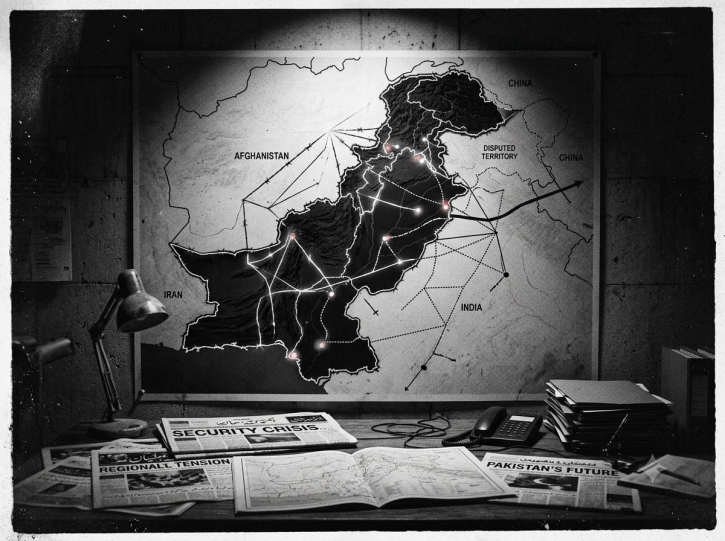
However, Pakistan’s terrorism challenge extends beyond the issue of cross-provincial movement. It is rooted in a complex history involving political decisions, military policies, and security strategies developed over several decades.
Analysts have noted that some militant organizations in Pakistan gained strength within the broader environment created by the country’s security and geopolitical policies at different points in its history. The emergence of groups such as Lashkar-e-Taiba and Jaish-e-Mohammed has also been linked to the wider regional conflicts and security politics of South Asia. At the same time, Pakistan has conducted military operations against other militant organizations operating within the country.
Pakistan’s current security crisis, therefore, cannot be fully explained by attributing it to any single province or population. A broader assessment requires consideration of the country’s past policies, political decisions, and its changing relationships with various armed groups.
Pakistan’s political history also demonstrates that long-term stability requires more than military action. Political participation, public trust, effective governance and civil rights are equally important. The events of 1971 remain a significant example of the long-term consequences of political and regional disparities within the Pakistani state.
Addressing terrorism today therefore requires a comprehensive approach rather than assigning collective responsibility to a neighboring province or its population. A combination of effective security measures, stronger inter-provincial coordination, political engagement, and institutional reform will be essential to improving Pakistan’s long-term security environment.