
Five Reasons Behind Republicans’ Defeat in the US Midterm Elections
Published : 11:18, 5 November 2026
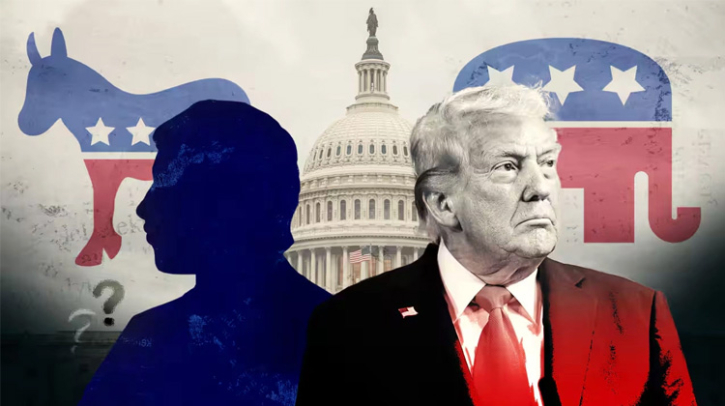
The ruling Republican Party has suffered a major setback in the US midterm elections, losing control of both chambers of Congress to the opposition Democratic Party. Midterm elections traditionally see the incumbent president’s party lose seats. However, the scale of the Republicans’ defeat this time is being viewed as a reflection of voter dissatisfaction with President Donald Trump’s first two years in office.
Several factors contributed to the Republican Party’s poor performance. These include the rising cost of living, public discontent over the war with Iran, declining approval of Trump, the Democrats’ campaign strategy and a loss of support among some Hispanic and Black voters.
A BBC analysis identifies five major reasons behind the Republicans’ defeat.
1. Voter frustration over the cost of living
Rising prices emerged as a major challenge for Republicans. Higher costs for fuel, food and other essential goods fuelled public dissatisfaction. Voters across several states voiced their frustration during the election campaign.
According to government figures, US inflation rose to 3.7% in the year through September, driven by higher fuel and energy prices. The average retail price of diesel in early October also came close to the record level set in September.
The pressure on household finances was reflected in election polling. Around 79% of voters said inflation had caused moderate to serious financial hardship for them or their families over the past year. More than 60% of respondents blamed the Trump administration's policies for the situation.
Analysts say the administration's failure to ease the pressure on everyday household expenses had a negative impact on Republican candidates.
2. Public anger over the Iran war
The war with Iran has emerged as another major factor behind the Republican defeat. After the United States and Israel launched military operations against Iran in February, tensions spread across the Middle East. The effective closure of the Strait of Hormuz disrupted international energy supplies, pushing up global oil and gas prices and affecting American consumers.
The conflict became unpopular among a significant section of the American public. Even some supporters of Trump's Make America Great Again (MAGA) movement viewed the military campaign as being at odds with his declared ‘America First’ agenda.
During his election campaign, Trump had promised to avoid involving the United States in new wars. His decision to launch military action against Iran therefore raised questions among some of his own supporters.
In one poll, 63% of Americans said military action against Iran was the wrong decision. Meanwhile, 74% of voters said the war was an important or crucial factor in their decision to vote in the congressional elections.
After the defeat, Trump acknowledged that the war had influenced the election outcome. However, in an interview with Fox News, he insisted that he had no alternative but to take military action to prevent Iran from acquiring nuclear weapons.
3. Democrats tailored their campaign to voters’ concerns
The Democrats’ campaign strategy also played an important role in their success. Rather than focusing solely on national political debates, their candidates put everyday concerns at the centre of their campaigns.
Reducing the cost of living, making healthcare more affordable and improving financial security were among their key messages. This helped candidates connect directly with voters' personal and family concerns.
Former Texas teacher James Talarico and Kansas pastor Adam Hamilton sought support by speaking about their faith and values. In South Carolina, former paediatrician Annie Andrews secured an unexpected victory, with healthcare affordability featuring prominently in her campaign.
In Michigan, Abdul El-Sayed campaigned on reducing the influence of money in politics and putting more money in people's pockets. Meanwhile, re-elected Georgia Senator Jon Ossoff focused on the cost of living and corruption.
Ossoff's victory in Georgia, a state Trump had won twice, has prompted fresh discussion about the effectiveness of the Democrats' campaign strategy and the senator's potential political future.
Trump himself indirectly acknowledged the effectiveness of the Democrats' campaign, telling Fox News that they had done a good job. By contrast, some Republican candidates, including Ken Paxton in Texas, faced criticism for failing to focus sufficiently on voters' main concerns.
4. Trump's declining popularity hurt Republican candidates
Another major obstacle for Republicans was the decline in President Donald Trump's popularity. Voter dissatisfaction with his administration's handling of inflation and the Iran war also affected candidates from his party.
Signs of declining support for Trump were visible not only among opposition voters but also within the Republican electorate. In several states that backed him in the 2024 presidential election, Republican candidates faced tough contests this time.
During the campaign, Trump urged voters to act as if his own name were on the ballot. However, the strategy failed to deliver the expected results. Analysts suggest that placing too much emphasis on Trump during the campaign may also have worked against the party.
Before the election, several opinion polls indicated that most voters wanted Trump to pay greater attention to concerns about rising prices. Yet, in his final campaign speech in Washington, DC, he spent considerable time discussing the controversial renovation of the reflecting pool at the Lincoln Memorial. The contrast between that subject and the economic difficulties facing ordinary Americans prompted questions about how closely his message matched voters' priorities.
5. Republicans lost support among Hispanic and Black voters
A section of Hispanic and Black voters supported the Republican Party in the 2024 presidential election, and their votes played an important role in Trump's victory. However, that support appears to have shifted in the latest midterm elections.
Democratic victories in three Hispanic-majority congressional districts along the Texas-Mexico border dealt a significant blow to Republicans. Democratic candidates won all three seats in the region.
There was also a notable shift towards Democratic candidates in Senate elections across majority-Black counties. Public dissatisfaction with immigration enforcement and the activities of immigration authorities may have contributed to the changing voting patterns.
Overall, economic pressures, the impact of the Iran war, declining presidential popularity and shifts in support among key voter groups all contributed to the Republican Party's poor performance. The BBC analysis suggests that the defeat was not simply the result of the Democrats' campaign efforts; it also reflected the gap between the Republican administration's decisions and voters' expectations.
Subject-