
From the Sepoy-People’s Uprising to the Mass Uprising: The Continuity of Leadership in the Zia Family
Published : 15:00, 7 November 2026
Some dates in Bangladesh's political history go beyond the calendar and become closely associated with the nation's political transformation. November 7 is one such day. The Sepoy-People's Uprising of 1975 marked a significant turning point in the country's political history. Over the following decades, the political roles of Ziaur Rahman, Begum Khaleda Zia and Tarique Rahman became part of what the Bangladesh Nationalist Party (BNP) and its supporters describe as a continuing political legacy.
Following the assassination of Bangabandhu Sheikh Mujibur Rahman on August 15, 1975, Bangladesh entered a period of political and military instability. On November 3, a counter-coup led by Brigadier Khaled Mosharraf took place within the military. The situation became increasingly complicated as different factions struggled over military command and state authority.
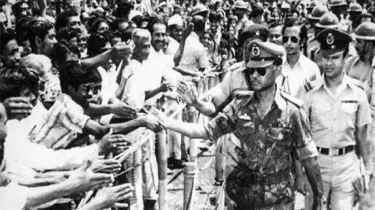
Amid this uncertainty, a sepoy uprising began during the night of November 6–7 at Dhaka Cantonment. Then Army Chief Major General Ziaur Rahman was released from house arrest. Soldiers and sections of the public took to the streets, and Zia emerged as a central figure in the unfolding political developments. The day is commemorated by the BNP as National Revolution and Solidarity Day and is widely referred to by the party's supporters as the Sepoy-People's Revolution.
Following the events of November 7, Ziaur Rahman returned to a key position in the military leadership and became Deputy Chief Martial Law Administrator. Although Justice Abu Sadat Mohammad Sayem remained President, Zia gradually emerged as an influential figure in state administration and political decision-making.
Under Zia's leadership, initiatives were taken to restore multiparty political activities. Restrictions on political parties were gradually relaxed, and on September 1, 1978, he founded the Bangladesh Nationalist Party (BNP). The party emerged as a major political force with its emphasis on Bangladeshi nationalism, political pluralism and economic development.
During his leadership, Zia introduced initiatives focused on agricultural production, canal excavation, manpower exports, rural development and private-sector growth. His administration also contributed to the early policy environment for the development of Bangladesh's ready-made garment industry. His supporters consider these initiatives important foundations of the country's subsequent economic progress.
Ziaur Rahman was assassinated in Chattogram on May 30, 1981, during an attempted military coup. Following his death, Justice Abdus Sattar assumed the presidency and was subsequently elected President. However, on March 24, 1982, then Army Chief Lieutenant General Hussain Muhammad Ershad seized power through a military coup, ushering in another period of military rule.
It was against this political backdrop that Zia's wife, Begum Khaleda Zia, entered active politics. After joining the BNP in 1982, she quickly rose through the party's leadership. She became a vice-chairperson in 1983 and assumed the position of party chairperson in 1984.
Khaleda Zia played a prominent role in the movement against Ershad's military government. Leading the Seven-Party Alliance, she organised opposition movements demanding the restoration of democracy. Her decision to boycott the 1986 election and her continued political campaigns strengthened her position as a leading opposition figure. She was arrested and detained on several occasions during the anti-autocracy movement.
The movement gradually expanded with the participation of students, professionals and various political organisations. On December 6, 1990, Ershad's government fell following a nationwide movement involving major political parties, including the BNP and the Awami League.
Khaleda Zia's leadership during this struggle earned her the popular title of the 'Uncompromising Leader'.
Following the BNP's victory in the February 27, 1991 parliamentary election, Khaleda Zia became Bangladesh's first female Prime Minister. Her government played an important role in restoring the parliamentary system through the Twelfth Amendment to the Constitution, marking a significant chapter in the country's democratic transition.
Bangladesh's political challenges continued in subsequent years. The political crisis of 2007 and the military-backed caretaker government created new challenges for the country's major political parties. After the Awami League came to power in 2008, the BNP raised concerns over electoral arrangements, democratic rights, human rights and political freedom.
During this period, Tarique Rahman emerged as an important figure in the next generation of BNP leadership. The party presented him as the political successor to Ziaur Rahman and Khaleda Zia. Despite living in the United Kingdom for an extended period, he remained involved in the party's organisational activities and political programmes, providing guidance to party leaders and activists.
Following the abolition of the caretaker government system in 2011, political disagreements over electoral arrangements intensified. The BNP launched movements demanding elections under a neutral caretaker government. According to the party, Tarique Rahman continued to coordinate organisational activities and provide political direction from abroad.
Another major turning point came during the July-August 2024 mass uprising. Initially triggered by demands for reform of the government job quota system, the student-led movement gradually expanded into a nationwide protest against discrimination and government policies. People from different professional and social backgrounds joined the demonstrations.
Violent clashes, loss of lives and allegations of widespread repression intensified the situation. On August 5, 2024, then Prime Minister Sheikh Hasina resigned and left the country, bringing a major political transformation to Bangladesh.
In the BNP's political narrative, the July-August uprising represented the culmination of a prolonged struggle for democracy, voting rights and political freedom. The party places particular emphasis on Tarique Rahman's political guidance and his role in maintaining organisational momentum during the period of opposition politics. However, the 2024 uprising was fundamentally a broad-based movement led by students, with participation from diverse political and social groups.
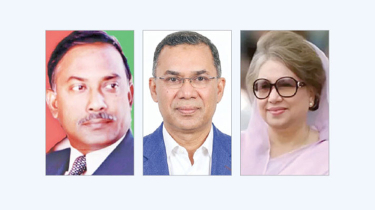
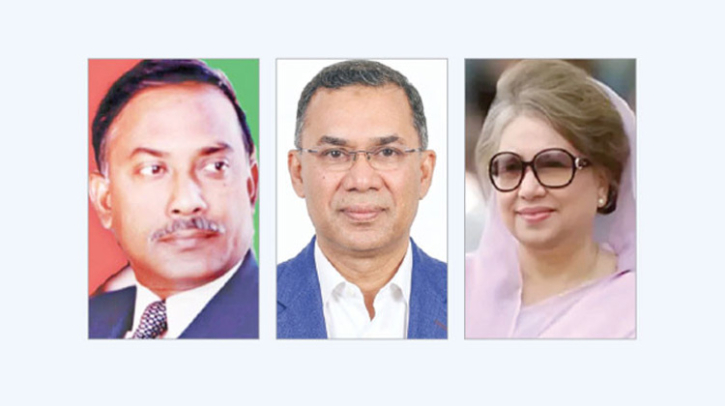
The BNP views the political roles of three generations of the Zia family as interconnected chapters of a larger political legacy. Ziaur Rahman's role in the Liberation War and the political developments of 1975, Khaleda Zia's leadership in the anti-Ershad movement, and Tarique Rahman's position during the political struggles leading up to the 2024 uprising are presented by the party as parts of this historical continuity.
For BNP supporters, Ziaur Rahman's contribution to nationalist politics, Khaleda Zia's struggle for democratic restoration and Tarique Rahman's political leadership represent different stages of a shared political vision.
Nevertheless, interpretations of November 7, 1975, and the July-August 2024 uprising remain subjects of political and historical debate in Bangladesh. The events of 1975 involved military rivalries, a sepoy uprising and competing political forces. Similarly, the 2024 uprising brought together students, ordinary citizens, political organisations and different sections of society.
For the BNP and its supporters, however, November 7 represents more than a historical date. It symbolises the political emergence of Ziaur Rahman and the beginning of a political legacy subsequently carried forward by Khaleda Zia and Tarique Rahman.
From the Sepoy-People's Uprising of 1975 to the mass uprising of 2024, the party views this political journey as a continuing struggle for democracy, people's rights, nationalism, independence and national sovereignty.
Subject-