
Joyita Rashid: A Rising Artist Bridging Two Worlds of Creativity
Published : 02:06, 13 August 2026
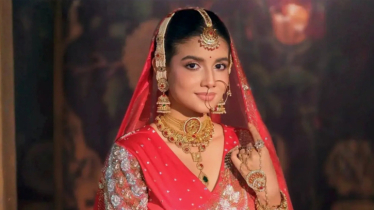
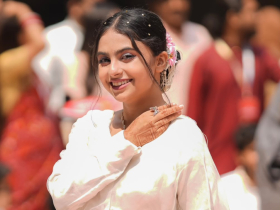
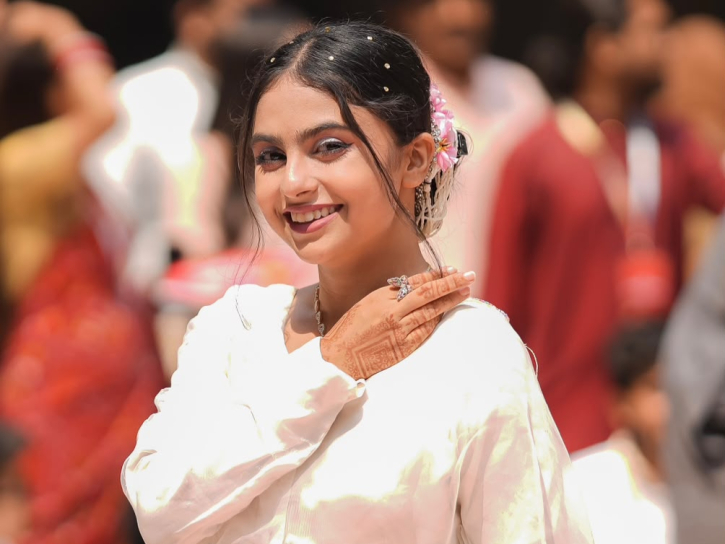
Joyita Rashid is emerging as a distinctive artistic talent, making her mark in two different creative fields—dance and voice-over. With a passion for dance since early childhood and a natural ability to imitate voices, she has gradually built a unique identity as both a dancer and a voice-over artist.
Although her family roots are in Khulna, Joyita grew up in Dhaka. Recently, she received the Swarn Mukut Nrityaratna Award 2025 for her achievement in dance. The recognition has become particularly meaningful to her because she had returned to a dance competition after a long gap and won without any prior preparation.
“I honestly had no idea that the competition was taking place,” Joyita said. “I learned about it the night before and participated without any preparation. So when I unexpectedly won first place and received the award, the happiness was completely different. It was a proud and emotional moment for me after years of practicing dance.”
A Journey That Began at Three
Joyita's journey in dance began when she was just three years and two months old. Her mother played the most important role in introducing her to dance and became her first teacher.
Interestingly, Joyita was not particularly interested in dance during her early childhood. She was even afraid of her dance teacher, often refusing to attend classes and sometimes crying before lessons.
Over time, however, her relationship with dance changed completely. She gradually discovered that dance was more than an art form—it was a way of expressing herself. Through movement, she could communicate emotions, happiness and feelings that were difficult to express otherwise.
For Joyita, performing on stage brings a sense of joy and fulfillment that is difficult to compare with anything else.
From Cartoon Voices to Professional Voice-Over
Alongside dance, Joyita developed an interest in voice imitation during childhood. Cartoon characters particularly fascinated her. She would watch cartoons repeatedly and imitate the voices of her favourite characters for her parents and siblings.
Her mother encouraged the hobby from the beginning. At the time, Joyita had no idea that this childhood pastime would eventually become part of her professional identity.
The turning point came during the COVID-19 pandemic in 2020. Joyita noticed an online competition where participants were imitating the voices of actors and actresses. She also noticed that relatively few people were attempting cartoon-character voices.
Inspired by her childhood habit, she decided to participate.
Initially, she lacked confidence because many participants were professionals, while she had learned voice imitation primarily through personal interest and practice. Her mother encouraged her to take the first step.
Her mother held the camera while Joyita recorded her first video. The response was surprisingly positive. Encouraged by the feedback, she continued producing more videos. Gradually, a childhood hobby evolved into a professional journey as a voice-over artist.
Voice-Over Is More Than Having a Good Voice
Joyita believes that having a pleasant or distinctive voice alone is not enough to become a successful voice-over artist.
According to her, voice-over requires acting ability, emotional expression, and an understanding of character.
“A voice-over artist does not simply speak through a microphone. They act through their voice,” she explains.
A sad situation requires genuine emotion, while a cheerful cartoon character needs energy, excitement and the right expression. The ability to communicate these emotions through changes in tone, pitch and delivery is what makes a voice-over performance effective.
Her early musical training has also helped her develop vocal control. Alongside dance, Joyita studied music under Sujit Mustafa. Regular vocal practice helped her learn how to control different ranges of her voice, from high to low tones.
That experience has subsequently helped her adjust her voice according to different characters and situations.
The Challenge of Pronunciation and Expression
Her journey in voice-over has not been without challenges. Joyita considers accurate pronunciation, appropriate emotion, expression, and completing a script within a specific time frame among the biggest challenges in the profession.
Since she studied in an English-medium environment, she had comparatively less exposure to formal Bangla practice during childhood. As a result, mastering the pronunciation of difficult Bangla words required additional effort.
Now, whenever she receives a new or challenging script, she first works on pronunciation. She then determines where to pause, which words require emphasis, and what emotional tone is appropriate for each part of the script.
AI Is Not Simply a Threat
With artificial intelligence increasingly capable of generating and imitating human voices, the future of voice-over work is changing rapidly. Joyita, however, does not view AI solely as a threat.
She believes technology may be able to imitate a person's voice, but human performers retain an important advantage—the ability to understand a character's situation and emotion and express it spontaneously.
For her, human emotion, acting, and natural expression remain the qualities that distinguish professional voice-over artists from automated systems.
“When I Dance, My Body Speaks”
Although dance and voice-over are two different artistic disciplines, Joyita sees a fundamental connection between them: expression.
“When I dance, my body speaks; and when I do voice-over, my voice speaks,” she says.
In dance, she communicates through body movements, facial expressions and gestures. In voice-over, she uses changes in tone, pitch and emotion to communicate the same kind of feelings.
While she considers them two separate worlds, both are ultimately centered on expression and emotion.
Making Time for Dance
Despite academic and professional commitments, Joyita continues to practice dance regularly.
Her days are often filled with classes from morning to evening. Whenever she gets an hour or an hour and a half of free time, she prefers to use it for dance practice or creating dance videos rather than simply spending the time socializing.
She believes consistent practice does not always require long hours. Even short periods of free time can be used effectively to maintain discipline and improve skills.
A Surprise Return to Competition
Joyita has a long history of participating in dance competitions. As a child, she won several awards, but around four years ago she largely stopped participating in competitions.
The decision was influenced by advice from her dance mentor, who once told her that she had already won many awards and should now allow newer performers to have opportunities.
The advice stayed with her. She felt that emerging dancers also deserved a chance to shine, so she stepped away from competitive stages.
Her participation in the recent competition was completely unexpected.
She learned about the event through a senior colleague and attended on the final day, when the last dance segment was being held. With no preparation and no expectation of winning, she took part.
Yet she finished first and received the Swarn Mukut Nrityaratna Award 2025.
The achievement became even more meaningful because it came after years away from competitive dance and without prior preparation.
A Recognition of a Lifelong Passion
Winning the award also brought back memories of her childhood.
When she was young, Joyita would become disappointed whenever she failed to win first place in a competition. Returning to the competitive stage years later and winning again made her feel as though she had briefly returned to those childhood days.
For Joyita, the award is more than a trophy. It represents recognition of years of dedication to dance and an emotional reminder of the journey she began as a child.
With her roots in Khulna and her upbringing in Dhaka, Joyita Rashid is now moving forward while embracing both sides of her artistic identity.
On one side is her dream of bringing characters to life through her voice; on the other is her passion for expressing emotions through movement on the dance stage.
Though the two disciplines are different, her purpose remains the same—to connect creativity and emotion with audiences in her own distinctive way.
As Joyita continues to explore both worlds of art, her growing body of work and determination suggest that her journey is only entering a new chapter.